Personalized Medical Care & Dedicated International Patient Concierge

Medical Guide
Bone Marrow-Derived Stem Cell Therapy: An Honest Look
Understand bone marrow-derived stem cell therapy and BMAC for joints, how it compares with PRP, and why this care is investigational and not FDA-approved.
Schedule a ConsultationBone Marrow-Derived Stem Cell Therapy: An Honest Look
Medically reviewed by Dr. Heejun Kim, Board-Certified Orthopedic Surgeon, Chief Director, Nucellin Orthopedic Clinic
Bone marrow-derived stem cell therapy, and the closely related bone marrow aspirate concentrate often abbreviated as BMAC, sits at the center of much of the excitement around regenerative orthopedics. It is also surrounded by confusion and overstated claims. This article is written for international patients researching regenerative orthopedic options at Nucellin Orthopedic Clinic in Seoul who want an honest explanation of what these therapies are, how they differ from platelet-rich plasma, what the evidence actually supports, and what the regulatory facts are.
The essential context comes first: in the United States, bone marrow-derived cell products are not FDA-approved for orthopedic or joint indications; they are considered investigational. The FDA has warned consumers about unapproved stem-cell products because of documented safety risks and unproven marketing claims. Care at Nucellin Orthopedic Clinic is delivered in the Republic of Korea under Korean medical regulation, not under U.S. regulation. No outcome is guaranteed, results vary between individuals, and the clinical evidence remains limited and still developing. Nothing here should be read as a promise to regrow cartilage, cure arthritis, or reverse a degenerative process.
What Bone Marrow-Derived Cells Are
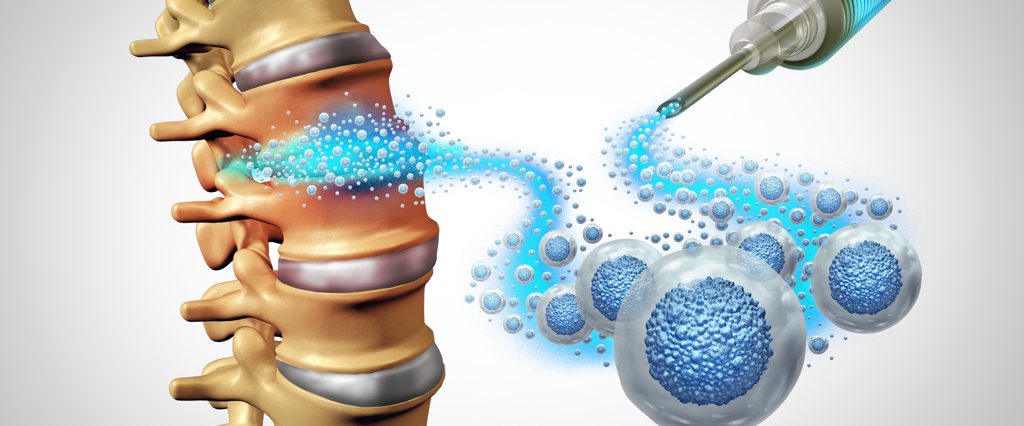
Bone marrow is the soft tissue inside certain bones, most familiarly the pelvis, and it is a rich source of several cell types. When people talk about bone marrow stem cell therapy for a joint, they are usually referring to cells obtained by drawing marrow, typically from the iliac crest of the pelvis, and then concentrating it. Because the material comes from your own body, this is an autologous approach, which avoids concerns about rejection or donor tissue.
It helps to be precise about terminology, because marketing often blurs it. Bone marrow contains hematopoietic stem cells, which are the cells responsible for producing blood, as well as a smaller population of mesenchymal stromal cells, which are the cells most often discussed in the context of musculoskeletal repair. When you see "hematopoietic stem cell orthopedic treatment" used loosely online, it is worth understanding that the regenerative interest for joints centers mainly on the mesenchymal cells and the broader mix of cells and growth factors in the concentrate, rather than on the blood-forming cells specifically. The honest scientific point is that a marrow concentrate is a complex mixture, not a purified dose of a single, well-characterized "stem cell."
Understanding Bone Marrow Concentrate (BMAC)
Bone marrow aspirate concentrate, or BMAC, is the most common way marrow is used in orthopedic settings. The process is generally described in a few steps. First, marrow is aspirated from the pelvis with a needle, usually under local anesthesia and often with imaging guidance. Second, that aspirate is spun in a centrifuge to concentrate the cellular and growth-factor components and separate them from other material. Third, the concentrated preparation is injected into the target joint or soft tissue, frequently under ultrasound or fluoroscopic guidance for accurate placement.
An important, honest caveat is that BMAC is not a standardized product. The volume aspirated, the technique, the centrifugation protocol, and the individual patient all affect what ends up in the final injection. The actual number of true stem cells in a typical concentrate is often lower than the name "stem cell therapy" might suggest. This variability is one of the main reasons the research is difficult to compare across clinics and why cautious language is appropriate.
The Regulatory Reality
Understanding the regulatory landscape protects you. In the United States, the FDA has been clear that most stem-cell interventions marketed for orthopedic and other uses are not approved and have not been proven safe and effective for those indications. The agency has warned the public directly about unapproved stem-cell products, citing reports of serious harm, including infections, when unproven products have been administered.
The equipment used to prepare a concentrate, such as centrifuges and collection kits, may be cleared as medical devices, but a cleared device is not the same as an approved therapy. This distinction matters. A responsible clinic will tell you plainly that bone marrow-derived cell therapy is investigational, that regulators have not endorsed it for joint disease, and that any care you receive in Korea is governed by Korean law and Korean medical standards rather than by U.S. approvals. If any provider implies FDA approval for an orthopedic stem-cell injection or treats guaranteed results as routine, treat that as a warning sign.
Bone Marrow Versus Blood: PRP and BMAC Compared
A frequent and reasonable question is how bone marrow-derived therapy differs from platelet-rich plasma, or PRP, since both are autologous regenerative injections. The clearest way to think about it is the source and the content.
PRP is derived from your blood. A small blood sample is drawn and spun to concentrate platelets and their growth factors, which are then injected. It is relatively simple to obtain, and the harvest is no more involved than a routine blood draw. Its main active ingredients are platelet growth factors rather than cells.
BMAC is derived from your bone marrow. The harvest is more involved, because marrow must be aspirated from bone rather than drawn from a vein, and the resulting concentrate contains a broader mix that includes mesenchymal stromal cells and other components in addition to growth factors. In theory, this richer cellular mixture is why marrow has attracted interest for joint applications.
When patients weigh PRP versus bone marrow stem cells, the honest bottom line is that neither is FDA-approved as a therapy for joints, both are investigational in the United States, both use your own tissue, and neither is a cure. Comparative studies exist, and some suggest potential benefits for each in mild-to-moderate joint disease, but the evidence is not strong or consistent enough to declare a clear winner for any given patient. BMAC involves a more demanding harvest than PRP, which is a practical consideration to discuss during a consultation. The right choice, if either is appropriate, depends on your diagnosis and goals and should be decided with a physician, not chosen from a menu.
What the Evidence Does and Does Not Show
For degenerative joint conditions such as knee osteoarthritis, reviews of bone marrow concentrate injections report that many patients experience improvement in pain and function compared with their starting point, and some comparisons with other injections have shown favorable results. That is a genuine and encouraging signal, which is why the approach continues to be studied seriously.
At the same time, the limitations are substantial and should not be glossed over. Many studies are small or lack rigorous control groups, follow-up periods are often short, and, as noted, preparations are not standardized, so it is difficult to say precisely which concentrate benefits which patient and for how long. Long-term durability and safety data remain limited, and findings across studies are inconsistent. The fair summary is that bone marrow-derived therapy may help selected patients, that the evidence is limited and still developing, and that no result can be guaranteed.
Just as importantly, the research does not support the dramatic promises that circulate in advertising. There is no reliable evidence that a marrow injection predictably regrows cartilage, reverses established arthritis, or lets a patient skip a surgery that is genuinely indicated. Any benefit tends to be symptomatic and variable, and expectations should be especially modest in advanced, "bone-on-bone" joint disease.
Why a Conservative-First Approach Matters
Sound orthopedic care usually begins with the least invasive, best-evidenced measures and escalates only when they prove insufficient. For many joint and soft-tissue problems, that means activity modification, targeted physical therapy, strengthening, weight management where relevant, and time. These foundations are well supported and carry low risk, even if they lack the appeal of a high-tech injection.
Regenerative options, including bone marrow-derived cells, are best considered as one possibility among several after appropriate conservative care has been tried and when the clinical picture genuinely fits. A bone marrow concentrate injection into a joint does not guarantee that surgery can be avoided, and presenting it that way sets false expectations. The philosophy at Nucellin Orthopedic Clinic emphasizes addressing the underlying biological drivers of a musculoskeletal problem alongside movement-based rehabilitation, and that only works when the diagnosis comes first and expectations stay honest.
Why Diagnosis Comes Before Any Injection
Two people with the same complaint can have very different underlying problems, and the same injection is not equally appropriate for both. That is why a careful history, a hands-on physical examination, and appropriate imaging come before any recommendation. Imaging such as X-ray, ultrasound, or MRI is a diagnostic tool that clarifies what is happening inside the joint; it is not a treatment in itself, and it does not guarantee a particular outcome.
At the clinic, diagnostic ultrasound and other imaging are used to localize the pain source and, when an injection is appropriate, to guide the needle accurately. A physician who invests the time to establish exactly what is causing your symptoms is more valuable than one who offers the same procedure to everyone. Candidacy for any regenerative orthopedic stem cell approach in Seoul is decided by this kind of examination, not by a website, a questionnaire, or a marketing claim.
Safety, Risks, and Realistic Expectations
Because bone marrow-derived approaches use your own tissue, they avoid rejection concerns, and autologous procedures performed properly are often described as having a reasonable safety profile. However, "autologous" describes only the source of the material; it says nothing about proven benefit, and it does not remove risk. Aspirating marrow and injecting a concentrate are still medical procedures with possible complications, including infection, bleeding, pain at the harvest or injection site, and the real possibility that the treatment does not help.
The FDA's warnings about unapproved stem-cell products exist because some patients have been harmed by poorly regulated interventions promoted with exaggerated claims. Realistic expectations are themselves a form of safety. A responsible discussion covers what the therapy might reasonably aim to do, what it cannot do, the alternatives, the consequences of doing nothing, and the honest uncertainty that remains. Results vary, evidence is limited, and no ethical clinician can promise a cure.
Cost and Insurance Context
This article does not discuss prices. It is helpful to know, however, that regenerative orthopedic treatments such as bone marrow-derived cell therapy are generally considered elective and, because they are investigational, are typically not covered by U.S. health insurance. Coverage rules differ by plan and by country, so confirm the specifics directly with your own insurer and with the clinic before making decisions.
About the Clinic and the Reviewing Physician
Nucellin Orthopedic Clinic is located at 4F, 71 Dokseodang-ro, Yongsan-gu, Seoul, Republic of Korea, and is a Registered Medical Institution for Attracting Foreign Patients, certified by the Korean Ministry of Health and Welfare. An English-speaking coordinator supports inquiries and interprets during consultations, which helps international patients ask detailed questions and understand the honest limits of any regenerative option.
This article was medically reviewed by Dr. Heejun Kim, the clinic's Chief Director and a board-certified orthopedic surgeon (a Korean credential). His background includes training at Yonsei University College of Medicine and an orthopedic surgery residency at Severance Hospital, along with roles as a Clinical Instructor and a Clinical Professorship at the Artificial Joint Center at Severance. He is a regular member of numerous Korean and international orthopedic and regenerative-medicine societies, including the International Society for Medical Shockwave Treatment (ISMST). To ask about your own situation, visit the clinic website or the contact page.
Frequently Asked Questions
Is bone marrow-derived stem cell therapy approved by the FDA for joints?
No. In the United States, bone marrow-derived cell products are not FDA-approved for orthopedic or joint indications and are considered investigational. The FDA has warned consumers about unapproved stem-cell products because of safety risks and unproven claims. At Nucellin Orthopedic Clinic, any such care is provided in Korea under Korean medical regulation, not under U.S. approval.
What is the difference between BMAC and PRP?
PRP is concentrated from your blood and delivers mainly platelet growth factors, while BMAC is concentrated from your bone marrow and contains a broader mix that includes mesenchymal stromal cells. BMAC involves a more demanding harvest from the pelvis, whereas PRP requires only a blood draw. Both are autologous and investigational in the United States, and neither is a cure; the appropriate choice, if any, depends on your diagnosis.
Can a bone marrow injection regrow cartilage or cure arthritis?
No. There is no reliable evidence that bone marrow concentrate injections predictably regrow cartilage, reverse arthritis, or cure degenerative joint disease. Any benefit tends to be symptomatic and variable rather than curative, and it is often modest in advanced arthritis. Results vary between individuals, and no outcome can be guaranteed.
Are these really stem cells, or something else?
A bone marrow concentrate is a complex mixture rather than a purified dose of a single stem cell. It contains hematopoietic stem cells, a smaller population of mesenchymal stromal cells, and various other cells and growth factors. The true number of stem cells in a typical concentrate is often lower than the term "stem cell therapy" implies, which is one reason honest, cautious language is important.
Will this help me avoid joint surgery?
Not reliably. A bone marrow concentrate injection does not guarantee that surgery can be avoided, and it is not a substitute for proper diagnosis, rehabilitation, and, when genuinely indicated, surgical care. For some patients it may be one option to consider alongside conservative measures, but whether it is appropriate depends entirely on the individual assessment.
How do I find out if I am a candidate?
Candidacy is decided by an in-person evaluation, not by a website or a symptom checklist. A physician will review your history, examine the affected area, and study appropriate imaging before discussing any option. This individualized assessment, rather than any advertised promise, determines whether a regenerative approach is reasonable for you.
The Bottom Line
- Bone marrow-derived therapy uses cells and growth factors concentrated from your own marrow (BMAC), a complex mixture rather than a pure stem-cell dose.
- In the United States it is not FDA-approved for orthopedic or joint use; it is investigational, and the FDA has warned about unapproved stem-cell products.
- Compared with PRP, BMAC comes from marrow rather than blood and involves a more demanding harvest, but neither is a proven cure and both are investigational.
- The evidence is limited and inconsistent; there is no reliable proof that these injections regrow cartilage, reverse arthritis, or replace needed surgery.
- Care at Nucellin Orthopedic Clinic is delivered under Korean regulation; results vary, no outcome is guaranteed, and candidacy is decided by examination and imaging.
Disclaimer
This article is for general educational purposes only and is not a self-diagnosis tool. It does not replace an in-person consultation, examination, or personalized advice from a qualified physician. Bone marrow-derived stem cell therapy is not FDA-approved for orthopedic or joint indications in the United States and is considered investigational; the FDA has warned about unapproved stem-cell products. Care at Nucellin Orthopedic Clinic is delivered in the Republic of Korea under Korean medical regulation, not under U.S. regulation. No specific result is guaranteed, and individual outcomes vary. Always seek the advice of a qualified health provider with any questions about a medical condition.
More Articles
Continue reading our clinical guides.