Personalized Medical Care & Dedicated International Patient Concierge

Medical Guide
Focused & Radial Shockwave Therapy (ESWT): Healing Timeline Explained
Learn how Focused & Radial Shockwave Therapy (ESWT) supports healing, what the recovery timeline involves, and when results may appear. Explore today.
Schedule a ConsultationUnderstanding Chronic Musculoskeletal Pain
Many chronic orthopedic conditions are not caused by acute injury alone, but by tissue that has entered a state of stalled or incomplete healing. Conditions such as plantar fasciitis, tennis elbow (lateral epicondylitis), rotator cuff tendinopathy, patellar tendinopathy, and calcific tendinitis often involve degenerated tendon tissue with poor blood supply, which limits the body's natural ability to repair itself.
Traditional treatments — rest, anti-inflammatory medication, and physical therapy — can help manage symptoms, but they do not always stimulate the deeper biological repair process needed to resolve long-standing tendon or soft tissue damage. This is where shockwave therapy plays a distinct role.
What Is Focused and Radial Shockwave Therapy?
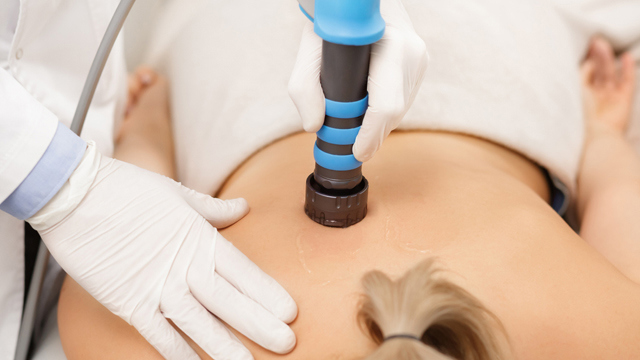
ESWT uses acoustic pressure waves delivered through the skin to stimulate healing at the cellular level. There are two main types of shockwave technology:
Focused Shockwave Therapy
Focused shockwaves concentrate energy at a precise depth and location within the tissue. This makes it particularly useful for treating deeper structures, such as tendon insertions near bone, or calcific deposits within tendons.
Radial Shockwave Therapy
Radial shockwaves disperse energy more broadly across a wider area near the surface. This approach is often used for larger muscle groups or more superficial soft tissue conditions, where treating a broader region is beneficial.
Both approaches work through a similar biological mechanism: the mechanical energy from the shockwaves triggers microtrauma at a controlled, therapeutic level, which activates the body's natural healing cascade. This process is thought to increase blood flow to the treated area, stimulate the production of growth factors, promote collagen synthesis, and help break down calcific deposits in chronic tendon conditions.
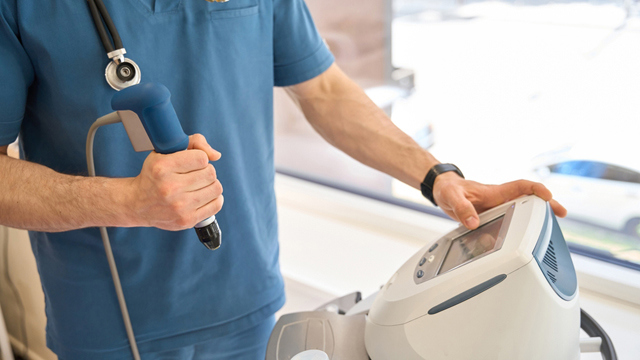
At Nucellin Orthopedic Clinic, ESWT is delivered using a high-energy focused shockwave system, allowing treatment to be calibrated to the specific tissue depth and condition being addressed.
Who Is a Good Candidate for ESWT?
ESWT is generally considered for patients who have:
Chronic tendon or soft tissue pain lasting longer than four to six weeks
Conditions that have not responded adequately to rest, medication, or physical therapy alone
A preference to avoid or delay surgical intervention
Diagnosed conditions such as plantar fasciitis, lateral or medial epicondylitis, rotator cuff tendinopathy, patellar tendinopathy, Achilles tendinopathy, or calcific shoulder tendinitis
As with any orthopedic treatment, suitability depends on an individualized evaluation. Not every source of pain responds equally well to shockwave therapy, which is why an accurate diagnosis — supported by physical examination and imaging — is an essential first step before treatment begins.
The Treatment Process at Nucellin Orthopedic Clinic
Step 1: Comprehensive Diagnostic Evaluation
Before any treatment is recommended, patients undergo a detailed physical examination along with musculoskeletal ultrasound assessment to confirm the exact source and extent of the problem. This diagnostic-first approach ensures that ESWT — or any other treatment — is applied only where it is genuinely indicated.
Step 2: Treatment Planning
Based on the diagnosis, the treatment plan is tailored to the specific tissue involved, selecting between focused or radial delivery, and determining the appropriate energy level and number of sessions.
Step 3: The ESWT Session
During the session itself, a handheld applicator delivers shockwave pulses directly over the affected area. Most sessions last between 10 and 20 minutes. Patients may feel a sensation of pressure or mild discomfort during treatment, which is generally well tolerated without anesthesia.
Step 4: Treatment Course
ESWT is rarely a single-session treatment. Most protocols involve a series of sessions, typically spaced one to two weeks apart, allowing the tissue time to respond biologically between treatments.
Recovery and Healing Timeline
One of the most common questions patients ask is how long it takes to feel results. The honest answer is that ESWT works progressively, not instantly, because it relies on stimulating the body's own repair mechanisms rather than providing immediate mechanical relief.
Immediately after treatment: Mild soreness, redness, or a dull ache in the treated area is common and typically resolves within 24 to 48 hours.
First 1–2 weeks: Some patients notice an initial reduction in pain, though it is also common for symptoms to temporarily feel unchanged or slightly more sensitive as the tissue begins its repair response.
3–6 weeks: This is generally when the cumulative effects of multiple sessions become more noticeable, as collagen remodeling and improved blood flow to the area progress.
6–12 weeks: For many chronic tendon conditions, the fuller benefit of ESWT is typically observed within this window, as biological tissue remodeling continues over this longer-term timeframe.
Recovery timelines vary based on the chronicity of the condition, the specific tissue being treated, and individual healing response. Patients with long-standing, calcified, or more severe tendon damage may require a longer course of treatment and a more gradual timeline than those with earlier-stage tendinopathy.
Safety Considerations
ESWT is considered a low-risk, non-invasive procedure when performed under proper medical supervision. It does not involve incisions, anesthesia, or extended downtime. That said, ESWT is not appropriate for everyone — it is generally avoided in patients who are pregnant, have active infections at the treatment site, have certain bleeding disorders, or have specific implanted devices near the treatment area. A thorough medical evaluation prior to treatment helps identify these considerations.
Medical Expertise Behind the Treatment
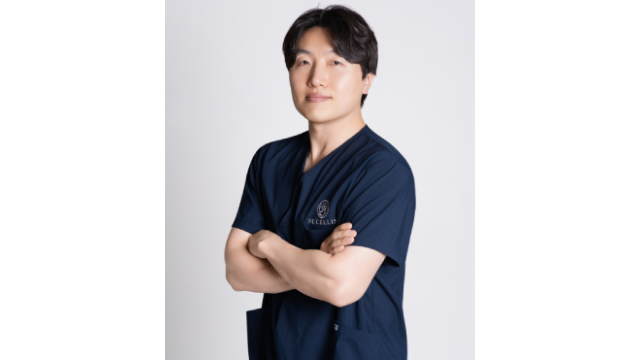
At Nucellin Orthopedic Clinic, ESWT is administered under the direction of Dr. Heejun Kim, a board-certified orthopedic surgeon who completed his medical degree at Yonsei University College of Medicine, followed by internship and orthopedic surgery residency training at Severance Hospital within the Yonsei University Health System. Dr. Kim later served as a Clinical Instructor in the Department of Orthopedic Surgery at Severance Hospital before founding Nucellin Orthopedic Clinic, where his clinical focus centers on regenerative orthopedic medicine, sports medicine, and ultrasound-guided interventional care.
This diagnostic-first, ultrasound-guided approach — supported by advanced equipment such as focused shockwave systems and musculoskeletal ultrasound imaging — allows treatment to be precisely targeted to each patient's condition rather than applied as a generalized protocol.
Realistic Outcomes
Shockwave therapy is not a guaranteed cure for every tendon or soft tissue condition, and outcomes vary from patient to patient. However, for many individuals with chronic tendinopathy who have not responded to conservative treatment, ESWT offers a reasonable, well-studied, non-surgical option to pursue before considering more invasive interventions. Setting realistic expectations — understanding that healing unfolds gradually over several weeks — is an important part of getting the most benefit from treatment.
Conclusion
Focused and radial shockwave therapy represents a science-based, non-surgical option for patients dealing with chronic musculoskeletal pain that has not resolved through rest or conservative care alone. At Nucellin Orthopedic Clinic in Yongsan-gu, Seoul, ESWT is delivered as part of a broader diagnostic and regenerative treatment philosophy under the medical direction of Dr. Heejun Kim, with an emphasis on precision, patient education, and realistic, evidence-based expectations for recovery.
This article is provided for general informational purposes and does not replace individualized medical evaluation. Patients considering ESWT should consult directly with a qualified physician to determine whether the treatment is appropriate for their specific condition.
More Articles
Continue reading our clinical guides.