Personalized Medical Care & Dedicated International Patient Concierge

Medical Guide
Guide to Personalized Rehabilitation Therapy for Long-Term Recovery
Discover how Personalized Rehabilitation Therapy supports long-term recovery through tailored care, guided exercises, and clear goals. Learn more today.
Schedule a ConsultationUnderstanding the Role of Rehabilitation in Musculoskeletal Recovery

Musculoskeletal pain and injury rarely resolve through a single intervention. Whether the cause is a sports injury, joint degeneration, post-procedural recovery, or chronic overuse, lasting improvement depends on how well the body relearns strength, mobility, and coordinated movement over time. This is the core purpose of personalized rehabilitation therapy: not simply reducing pain in the short term, but restoring function so that recovery holds up under real-world activity.
Many patients experience a familiar cycle — pain improves temporarily with rest or medication, only to return once normal activity resumes. This pattern often reflects an underlying issue that hasn't been fully addressed: weakened supporting muscles, altered movement patterns, incomplete tissue healing, or joint mechanics that continue to place stress on the injured area. Personalized rehabilitation is designed to interrupt this cycle by treating the underlying functional deficit, not just the symptom.
At Nucellin Orthopedic Clinic in Yongsan-gu, Seoul, rehabilitation is approached as a structured, evolving process rather than a one-size-fits-all routine. Because the same diagnosis can present very differently from patient to patient depending on age, activity level, biomechanics, and healing capacity, treatment plans are built around each individual's functional status rather than the imaging report alone. This distinction matters clinically: research in musculoskeletal medicine has increasingly recognized that structural findings on MRI or X-ray — such as mild disc bulges, cartilage wear, or tendon changes — are common even in people without pain, which is why a purely image-based approach can sometimes miss the actual source of a patient's symptoms.
What Personalized Rehabilitation Therapy Involves
Personalized rehabilitation combines physical therapy techniques with regenerative and non-surgical orthopedic care, adjusted according to how a patient's tissue is healing and how their body is responding to treatment. Rather than following a fixed protocol, the plan is periodically reassessed and modified as recovery progresses.
Depending on the condition, a rehabilitation program at Nucellin may draw on:
Functional movement testing to identify compensations or weaknesses contributing to pain
Musculoskeletal ultrasound assessment to track tissue changes during recovery
Ultrasound-guided regenerative injections, such as Activated PRF or PDRN, when biologic support is appropriate
High-energy focused ESWT to stimulate tissue repair in tendons and ligaments
High-Intensity Laser Therapy (HILT) to support pain modulation and tissue healing
Hyperbaric Oxygen Therapy (HBOT) to enhance oxygen delivery to healing tissue
Structured physical therapy progressing from pain control to mobility, strength, and functional retraining
The specific combination depends entirely on the patient's diagnosis, healing stage, and goals — a younger athlete recovering from a ligament strain will typically follow a very different path than an older patient managing degenerative joint changes. Rehabilitation is generally organized around a few overlapping objectives: controlling inflammation and pain in the early stage, restoring range of motion once acute symptoms settle, rebuilding strength and neuromuscular control as tissue tolerates load, and finally retraining movement patterns specific to the patient's work, sport, or daily activities.
Who Is a Suitable Candidate
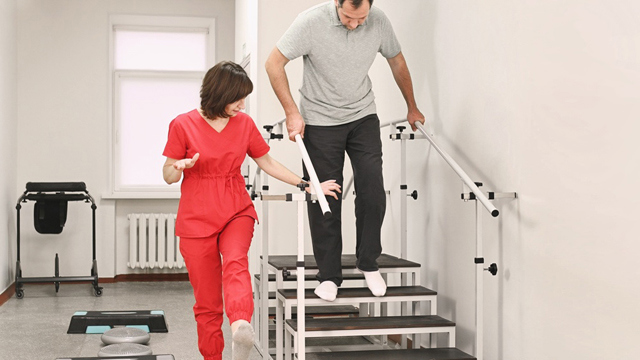
Personalized rehabilitation therapy is generally appropriate for patients who:
Are recovering from sports-related injuries affecting the shoulder, knee, ankle, elbow, wrist, or hip
Have chronic or recurring musculoskeletal pain not fully explained by structural damage alone
Are managing degenerative joint or tendon conditions and wish to avoid unnecessary surgery
Have completed a regenerative injection procedure and require structured follow-up care to support tissue integration
Want a non-surgical, function-focused approach before considering more invasive options
Patients often ask whether rehabilitation alone can replace surgery. The honest answer depends on the condition: some injuries, such as partial ligament tears, tendinopathies, and early-stage degenerative changes, often respond well to a conservative, function-based approach. Others — such as significant structural instability or advanced joint damage — may ultimately require surgical evaluation regardless of how well a patient responds to rehabilitation. This is why an individualized assessment, rather than a general assumption based on diagnosis alone, is the starting point at Nucellin.
Not every patient is a candidate for every therapy included in a rehabilitation plan. For example, certain regenerative injections or HBOT sessions may not be suitable depending on a patient's overall health status, medication use, pregnancy status, or the nature of their condition. This is determined through the initial evaluation rather than assumed in advance, and patients are encouraged to disclose their full medical history so that any contraindications can be identified before treatment begins.
The Evaluation and Treatment Process
At Nucellin, the rehabilitation process typically follows a structured sequence:
1. Comprehensive Initial Assessment
Each patient undergoes a detailed physical examination combined with musculoskeletal ultrasound imaging and functional movement testing. This step is intended to clarify not just where damage exists, but how it is affecting movement and daily function — since, as the clinic notes, pain does not always correspond directly to what appears on a scan. Functional movement testing may involve observing how a patient squats, reaches, walks, or performs a sport-specific motion, which can reveal compensation patterns that static imaging cannot capture.
2. Individualized Plan Development
Based on the assessment, a treatment plan is created that may combine regenerative therapies with structured physical rehabilitation. The plan outlines short-term goals (such as pain reduction and inflammation control) and longer-term goals (such as strength, range of motion, and return to activity). Patients are typically given a general timeline expectation at this stage, along with an explanation of how progress will be measured — for example, through repeat functional testing or ultrasound follow-up rather than symptom reporting alone.
3. Active Treatment Phase
During this phase, patients may receive ultrasound-guided injections or other regenerative treatments as clinically indicated, alongside supporting therapies such as HILT or ESWT. Physical rehabilitation exercises are introduced progressively, timed to match the body's healing response rather than a fixed calendar. Ultrasound guidance is used during injection-based procedures to help direct treatment precisely to the target tissue, which is intended to support accuracy and reduce unnecessary tissue disruption.
4. Reassessment and Adjustment
Recovery is not linear, so the plan is periodically reviewed. Functional testing and ultrasound follow-up help determine whether the current approach should continue, intensify, or shift toward a different therapeutic focus. If a patient plateaus or responds more slowly than expected, this stage allows the clinical team to reconsider the plan rather than continuing an approach that isn't producing results.
5. Long-Term Functional Recovery
The final phase focuses on consolidating gains — building strength and movement patterns that reduce the likelihood of re-injury and support a sustainable return to normal or athletic activity. For many patients, this stage also includes guidance on activity modification, posture, or training habits that may help maintain the improvements achieved during treatment.
The Role of Dr. Heejun Kim
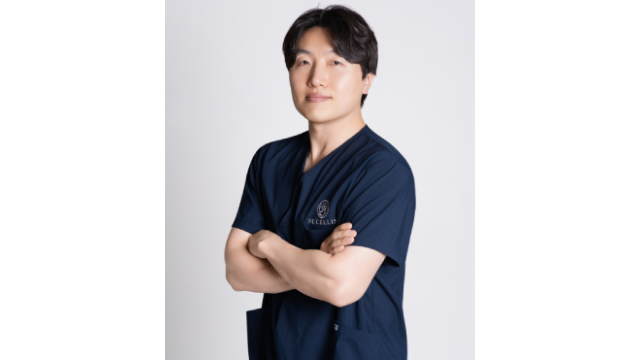
Rehabilitation planning at Nucellin is overseen by Dr. Heejun Kim, MD, founder and medical director of the clinic. Dr. Kim is a board-certified orthopedic surgeon whose background includes his medical degree from Yonsei University College of Medicine, an internship at Severance Hospital within the Yonsei University Health System, and orthopedic surgery residency training at Severance Hospital, where he also served as a clinical instructor in the Department of Orthopedic Surgery.
Dr. Kim's clinical focus centers on regenerative orthopedic medicine, sports medicine, and ultrasound-guided interventional care. This training informs how rehabilitation is structured at Nucellin: treatment decisions are grounded in direct ultrasound assessment and functional testing rather than imaging alone, with an emphasis on supporting the body's own healing processes before considering surgical alternatives. This philosophy shapes not only how injections are performed, but how rehabilitation exercises are sequenced and adjusted throughout a patient's recovery.
Clinic Strengths Supporting Rehabilitation Care
Nucellin Orthopedic Clinic is equipped with diagnostic and therapeutic technology that supports precise, individualized rehabilitation, including the Philips EPIQ 5 diagnostic ultrasound system, Storz Medical Ultra SD1 for focused ESWT, an IBEX Light hyperbaric chamber for HBOT, and dedicated processing systems for Activated PRF and stem cell-based therapies. This infrastructure allows the clinical team to guide procedures with precision and monitor tissue response over the course of treatment, rather than relying solely on periodic imaging or subjective symptom reports.
Having diagnostic ultrasound, regenerative processing systems, and rehabilitation-supportive technologies within a single clinical setting also allows treatment and reassessment to happen in a coordinated, streamlined way — which can be particularly valuable for patients balancing a busy schedule or coordinating care while visiting from abroad.
For international patients, the clinic also offers English-speaking consultations, private treatment suites, and concierge-style support throughout the treatment journey — considerations that matter for patients coordinating a rehabilitation program while traveling from abroad. Clear communication is especially important in rehabilitation care, where patients need to understand not just what a treatment involves, but how to participate actively in their own recovery between visits.
Recovery Expectations, Safety, and Realistic Outcomes
Recovery timelines for personalized rehabilitation therapy vary significantly depending on the condition being treated, its severity, and the patient's overall health. Some patients notice functional improvement within several weeks, while more complex or chronic conditions may require a longer, phased program spanning months. Age, prior injury history, activity demands, and how consistently a patient follows their rehabilitation exercises between clinic visits can all influence how quickly progress occurs.
It is important to approach rehabilitation with realistic expectations. Non-surgical and regenerative approaches are designed to support healing and function, but they do not guarantee a specific outcome for every patient, and not all conditions respond equally well to conservative treatment. Ultrasound-guided techniques and structured monitoring are used specifically to reduce procedural risk and track progress objectively, but any musculoskeletal treatment carries some degree of individual variability in response.
Patients are generally advised to communicate openly about pain levels, functional limitations, and any new symptoms throughout treatment, since this feedback directly informs how the rehabilitation plan is adjusted. Consistency with prescribed exercises and activity guidelines between sessions is also commonly emphasized, as rehabilitation outcomes are shaped as much by what happens outside the clinic as by the treatments delivered within it.
Patients considering rehabilitation therapy at Nucellin Orthopedic Clinic are encouraged to schedule a consultation for a personalized evaluation, during which a qualified clinician can assess their specific condition and discuss which combination of therapies may be appropriate for their recovery goals.
More Articles
Continue reading our clinical guides.