Personalized Medical Care & Dedicated International Patient Concierge

Medical Guide
Hyperbaric Oxygen Therapy for Sports and MSK Recovery
Hyperbaric oxygen therapy for sports and musculoskeletal recovery: the FDA-approved indications, what is off-label, safety risks, and the facts in Korea.
Schedule a ConsultationHyperbaric Oxygen Therapy for Sports and MSK Recovery
Medically reviewed by Dr. Heejun Kim, Board-Certified Orthopedic Surgeon, Chief Director, Nucellin Orthopedic Clinic
Hyperbaric oxygen therapy, usually abbreviated HBOT, has become a popular topic in sports recovery and musculoskeletal wellness, and it is surrounded by a lot of enthusiastic claims. This article explains what HBOT is, how it works, which uses are genuinely approved, which are considered off-label, what the evidence shows for sports and musculoskeletal recovery, and the safety points that matter. It is written for international patients researching HBOT at Nucellin Orthopedic Clinic in Seoul who want a clear, honest picture rather than marketing.
Here is the single most important fact to understand up front: in the United States, HBOT is FDA-approved only for a specific list of medical indications, such as decompression sickness, gas or air embolism, carbon monoxide poisoning, certain non-healing wounds including diabetic foot ulcers, and radiation injury. General musculoskeletal or sports-injury recovery, and any "anti-aging" or "regeneration" use, are not among the FDA-approved indications; those uses are considered off-label. Care at Nucellin Orthopedic Clinic is delivered in the Republic of Korea under Korean medical regulation, not under U.S. regulation. When HBOT is used for recovery support, it is used as an adjunct, no outcome is guaranteed, results vary, and the evidence for these uses is limited.
What Hyperbaric Oxygen Therapy Is
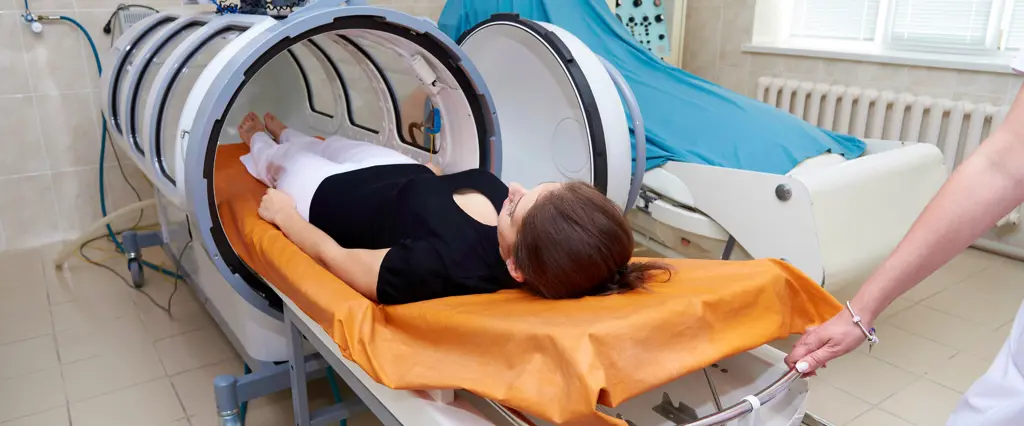
HBOT involves breathing oxygen inside a pressurized chamber, at a pressure greater than the normal atmosphere at sea level. Pressure is measured in atmospheres absolute, abbreviated ATA; one ATA is roughly the pressure you experience at sea level. During a session, the chamber is pressurized above that baseline while the patient breathes a high concentration of oxygen.
The underlying physiology is straightforward. Normally, most oxygen in the blood is carried by hemoglobin in red blood cells. Under increased pressure, a much larger amount of oxygen dissolves directly into the blood plasma, raising the amount of oxygen that can reach the tissues. For the FDA-approved indications, this dramatic increase in available oxygen is what drives the therapeutic effect, for example by supporting wound healing in tissue that is oxygen-starved, or by helping to clear carbon monoxide. The mechanism is real and well established for those specific conditions; the open question is how much it helps for uses outside that list.
The Device Used at the Clinic
At Nucellin Orthopedic Clinic, HBOT is delivered using an IBEX Light 3 hyperbaric chamber operating at 2 to 3 ATA. The ATA figure is a technical description of the pressure the chamber can reach, not a claim about outcomes. The pressure level, the concentration of oxygen delivered, the length of each session, and the number of sessions are all clinical parameters that should be set and supervised by the treating physician for each individual, rather than followed as a one-size-fits-all routine.
It is worth restating the regulatory point in this context. A chamber can be a legitimate, well-made device and still be used for a purpose that is not an FDA-approved indication. When the clinic uses HBOT to support musculoskeletal or sports recovery, that is an adjunctive, off-label application delivered under Korean regulation, and it should be understood as supportive rather than as a proven, approved cure for those conditions.
Approved Indications Versus Off-Label Use
Because this distinction is central, it deserves its own clear summary. The recognized, FDA-approved indications for HBOT are specific medical conditions, and the commonly cited list includes: decompression sickness; arterial gas or air embolism; severe carbon monoxide poisoning; gas gangrene and certain serious infections; crush injuries and acute traumatic ischemias in defined situations; compromised skin grafts and flaps; certain problem or non-healing wounds such as diabetic foot ulcers; delayed radiation injury; severe anemia in specific circumstances; and certain other defined conditions. These uses are supported by an established evidence base and formal recognition.
Sports recovery, general muscle or joint healing, fatigue, and anti-aging or "cellular regeneration" are not on that approved list. Using HBOT for those purposes is off-label. Off-label does not automatically mean unreasonable, physicians in many countries use approved devices for additional purposes based on clinical judgment, but it does mean the use is not formally approved and that patients deserve to know the difference. Honest care states plainly which side of the line a given use falls on.
The Evidence for Sports and Musculoskeletal Recovery
For sports and musculoskeletal recovery, the evidence for HBOT is limited and mixed. Some small studies and reviews suggest that short courses of HBOT may be associated with reduced pain or a faster return to activity after certain soft-tissue injuries, and animal studies have shown some improvements in muscle healing. A number of researchers consider these findings promising enough to justify further study.
At the same time, the limitations are significant. Many studies are small, use different pressures and session counts, measure different outcomes, and carry a meaningful risk of bias, which makes the overall body of evidence fragmented and hard to interpret. Systematic reviews in this area frequently conclude that there is not yet enough high-quality evidence to firmly recommend HBOT for routine sports or musculoskeletal recovery. The honest summary is that HBOT may offer supportive benefit for some patients in some situations, that the evidence is limited and still developing, and that no result can be guaranteed. Claims that HBOT reverses aging, regenerates tissue on demand, or cures musculoskeletal conditions go well beyond what the science supports.
Safety, Risks, and Contraindications
HBOT is generally well tolerated when properly supervised, but it is a genuine medical treatment with real risks, not a casual wellness activity. Understanding the safety points is part of making an informed decision.
Pressure-related effects. The most common issue is barotrauma, pressure-related discomfort or injury affecting air-filled spaces, most often the ears and sinuses. Patients are taught techniques to equalize ear pressure, and the middle ear is the area most frequently affected. In rarer cases, pressure changes can affect the lungs or, very rarely, cause other barotrauma.
Oxygen-related effects. Breathing high concentrations of oxygen under pressure can, uncommonly, cause oxygen toxicity, which may affect the lungs or, rarely, trigger seizures. Temporary changes in vision have also been reported with repeated sessions. These risks are managed through appropriate protocols and monitoring.
Fire and pressure safety. Because a hyperbaric chamber contains a pressurized, oxygen-rich environment, fire safety is a serious concern. Oxygen supports combustion, so strict rules govern what may be brought into the chamber; items and materials that could spark or ignite are prohibited. Reputable facilities follow careful protocols to manage both fire risk and the pressurization and depressurization process.
Contraindications. Certain conditions can make HBOT unsafe. An untreated pneumothorax (collapsed lung) is generally considered an absolute contraindication, and other conditions, medications, or recent surgeries may require caution or exclusion. This is one more reason candidacy must be decided by a physician who reviews your full medical history rather than by general information online.
Who Might Be a Candidate
Suitability for HBOT is decided by evaluation, not by a website or a symptom checklist. A physician will review your history, examine you, and consider your specific situation before recommending anything, and will screen for the contraindications noted above. Imaging and diagnostic tests, where used, help clarify the underlying problem; they are not treatments in themselves.
A conservative-first approach remains sensible. For most musculoskeletal and sports conditions, established measures such as rest, activity modification, physical therapy, and time are the foundation, with HBOT considered only as one possible adjunct when appropriate. It is important to be clear that HBOT for these purposes is supportive and off-label, not a stand-alone cure, and that choosing it should be an informed decision made with a physician who has explained both the potential and the limits.
Cost and Insurance Context
This article does not discuss prices. It is useful to know, however, that when HBOT is used for non-approved indications such as general sports or musculoskeletal recovery, it is typically considered elective and is generally not covered by U.S. health insurance, which more often covers HBOT only for the recognized approved indications. Coverage rules differ by plan and by country, so confirm the specifics with your own insurer and directly with the clinic before making decisions.
About the Clinic and the Reviewing Physician
Nucellin Orthopedic Clinic is located at 4F, 71 Dokseodang-ro, Yongsan-gu, Seoul, Republic of Korea, and is a Registered Medical Institution for Attracting Foreign Patients, certified by the Korean Ministry of Health and Welfare. An English-speaking coordinator supports inquiries and interprets during consultations, which helps international patients understand options such as HBOT and ask clear questions about approved uses, off-label uses, and safety.
This article was medically reviewed by Dr. Heejun Kim, the clinic's Chief Director and a board-certified orthopedic surgeon (a Korean credential). His background includes training at Yonsei University College of Medicine and an orthopedic surgery residency at Severance Hospital, along with roles as a Clinical Instructor and a Clinical Professorship at the Artificial Joint Center at Severance. He is a regular member of numerous Korean and international orthopedic and regenerative-medicine societies, including the International Society for Medical Shockwave Treatment (ISMST). To ask about your own situation, visit the clinic website or the contact page.
Frequently Asked Questions
Is HBOT FDA-approved for sports or musculoskeletal recovery?
No. In the United States, HBOT is FDA-approved only for a specific list of indications, such as decompression sickness, carbon monoxide poisoning, certain non-healing wounds, and radiation injury. General sports and musculoskeletal recovery, and anti-aging uses, are not on that list and are considered off-label. At Nucellin Orthopedic Clinic, HBOT for recovery is used adjunctively under Korean medical regulation.
What does 2 to 3 ATA mean?
ATA stands for atmospheres absolute, a measure of pressure; one ATA is about the pressure at sea level. A chamber operating at 2 to 3 ATA pressurizes the environment to two or three times sea-level pressure while the patient breathes oxygen. This is a technical description of the device, not a promise about results.
Does HBOT actually help injuries heal faster?
The evidence for sports and musculoskeletal recovery is limited and mixed. Some small studies suggest possible benefit for pain or return to activity after certain soft-tissue injuries, but study quality varies and reviews often conclude the evidence is not yet strong. Results vary between individuals, and no benefit can be guaranteed.
Is hyperbaric oxygen therapy safe?
HBOT is generally well tolerated when properly supervised, but it carries real risks, including ear and sinus barotrauma, uncommon oxygen toxicity, temporary vision changes, and important fire-safety considerations because of the oxygen-rich, pressurized environment. Certain conditions, such as an untreated collapsed lung, are contraindications. Candidacy must be assessed by a physician.
Can HBOT reverse aging or regenerate tissue?
No. Claims that HBOT reverses aging or regenerates tissue on demand go beyond what the evidence supports, and these are not approved indications. HBOT may offer supportive benefit for some patients in specific situations, but it is not a cure and results vary. Be cautious of any source promising dramatic or guaranteed outcomes.
How many HBOT sessions are needed?
There is no universal answer. The pressure, session length, and number of sessions are individualized and depend on the clinical situation and physician judgment. For off-label recovery uses in particular, any plan should be discussed carefully, and you should be wary of a fixed formula presented as guaranteed to work.
The Bottom Line
- HBOT delivers oxygen in a pressurized chamber, raising the oxygen dissolved in the blood to support tissue that needs it.
- In the United States it is FDA-approved only for specific indications such as decompression sickness, carbon monoxide poisoning, and certain non-healing wounds.
- General sports and musculoskeletal recovery, and anti-aging uses, are off-label; the clinic uses HBOT adjunctively under Korean regulation.
- The IBEX Light 3 chamber operates at 2 to 3 ATA; the evidence for recovery uses is limited, results vary, and no outcome is guaranteed.
- HBOT carries real risks, including barotrauma, oxygen effects, and fire-safety concerns, so candidacy must be decided by a physician.
Disclaimer
This article is for general educational purposes only and is not a self-diagnosis tool. It does not replace an in-person consultation, examination, or personalized advice from a qualified physician. HBOT is FDA-approved only for specific indications in the United States, and general musculoskeletal, sports-recovery, and anti-aging uses are off-label; care at Nucellin Orthopedic Clinic is delivered in the Republic of Korea under Korean medical regulation, not under U.S. regulation. No specific result is guaranteed, and individual outcomes vary. Always seek the advice of a qualified health provider with any questions about a medical condition.
More Articles
Continue reading our clinical guides.