Personalized Medical Care & Dedicated International Patient Concierge

Medical Guide
PRP Injections for Joint Pain: How Treatment Works
Understand how PRP injections for joint pain work, PRP versus cortisone, the honest evidence, and the US regulatory facts, from a Seoul orthopedic clinic.
Schedule a ConsultationPRP Injections for Joint Pain: How Treatment Works
Medically reviewed by Dr. Heejun Kim, Board-Certified Orthopedic Surgeon, Chief Director, Nucellin Orthopedic Clinic
Platelet-rich plasma, usually shortened to PRP, is one of the most talked-about options for joint pain, and also one of the most misunderstood. This article explains what PRP is, how the injection is prepared and given, what the evidence actually shows, and how it compares with a cortisone shot. It is written for international patients researching PRP at Nucellin Orthopedic Clinic in Seoul who want a clear, honest picture rather than marketing.
Here is the most important context up front: in the United States, PRP is not FDA-approved as a therapy for joint or orthopedic pain; it is considered investigational. The FDA does clear the kits and centrifuges used to prepare PRP as medical devices, but a cleared device is not the same as an approved treatment. Care at Nucellin Orthopedic Clinic is delivered in the Republic of Korea under Korean medical regulation, not under U.S. regulation. No outcome is guaranteed, results vary between individuals, and the long-term evidence remains limited.
What PRP Actually Is
PRP is made from your own blood, which is why it is called an autologous treatment. Your blood contains red cells, white cells, plasma, and platelets. Platelets are small cell fragments best known for helping blood clot, but they also carry growth factors, signaling proteins involved in the body's natural repair processes. The idea behind PRP is to concentrate those platelets and deliver them to an injured or degenerating area to support the body's own healing response.
Because PRP comes from your own body, it avoids concerns about rejection or donor material. That does not, however, make it automatically effective or approved. "Autologous" describes the source of the material; it says nothing about proven benefit for a given condition. Those are separate questions, and honest care keeps them separate.
How PRP Injections Are Prepared and Given
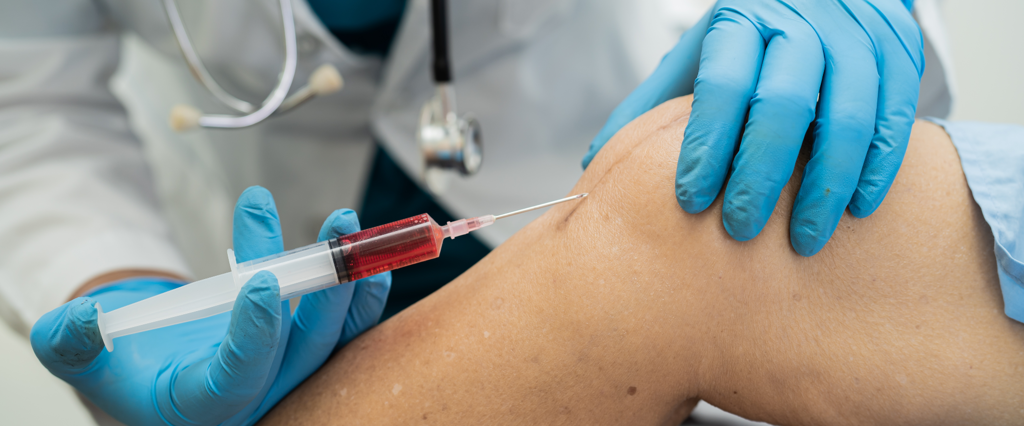
The process has a few clear steps. First, a small volume of your blood is drawn, much like a routine blood test. Second, the sample is placed in a centrifuge, a machine that spins rapidly to separate the blood into layers by density. This concentrates the platelets and separates them from other components. Third, the platelet-rich portion is collected and injected into the target joint or soft tissue, frequently with ultrasound guidance so the physician can place the needle precisely.
The kits and centrifuges used for this preparation are regulated in the United States as 510(k)-cleared devices. It is worth repeating why that distinction matters: clearance of the equipment does not mean the PRP therapy itself is FDA-approved. Different systems also produce different preparations. Some yield "leukocyte-poor" PRP (fewer white blood cells) and others "leukocyte-rich" PRP, and the concentration of platelets can vary widely. Because preparations are not standardized across clinics, two patients described as receiving "PRP" may actually receive quite different products, which is one reason the research is hard to compare.
The Evidence: Honest and Nuanced
For mild-to-moderate knee osteoarthritis, the evidence for PRP is mixed but promising. Several meta-analyses have suggested that PRP, particularly leukocyte-poor preparations, may offer benefits over hyaluronic acid or corticosteroid injections for pain and function in some patients. That is a genuinely encouraging signal, and it is why PRP continues to be studied seriously.
At the same time, the limitations are real. Long-term data are limited, study quality varies, and, as noted, preparations are not standardized, which makes it difficult to say precisely which PRP, at what dose, benefits which patient. PRP tends to be studied most in mild-to-moderate osteoarthritis; in advanced, "bone-on-bone" arthritis, expectations should be more modest. The honest summary is that PRP may help selected patients, the evidence is limited and still developing, and no result can be guaranteed.
PRP Versus a Cortisone Shot
Patients often ask how PRP compares with a cortisone (corticosteroid) injection, so here is a fair comparison.
A cortisone shot is a potent anti-inflammatory. It can reduce inflammation and provide meaningful pain relief relatively quickly, which is valuable for flare-ups. Its relief is often temporary, however, and cortisone works by calming inflammation rather than by supporting tissue repair. Repeated corticosteroid injections into a joint carry their own considerations, and a physician should weigh how often they are used.
PRP works on a different principle. Rather than suppressing inflammation, it aims to support the body's repair processes using your own concentrated platelets. Any benefit typically develops more gradually rather than immediately, and it may last longer in some patients, though this varies. The key regulatory difference is that corticosteroid injections are an established, approved treatment, whereas PRP as a therapy is investigational and not FDA-approved in the United States. Neither option is a cure, and neither guarantees a particular result. Which is more appropriate, if either, depends on your diagnosis, the severity of your condition, and your goals, and that is a decision to make with a physician.
Who Might Be a Candidate
PRP is not right for everyone, and suitability is decided by evaluation, not by a website or a symptom checklist. A physician will review your history, examine the joint, and study appropriate imaging before recommending anything. Imaging such as X-ray, ultrasound, or MRI is a diagnostic tool that helps clarify the problem; it is not a treatment in itself.
A conservative-first approach is sensible. For many joint conditions, activity modification, physical therapy, and time are reasonable starting points, with PRP considered as one option among several when those measures are not enough and the clinical picture fits. It is also important to understand that PRP does not "regrow cartilage" on demand or "reverse" arthritis; framing it that way sets false expectations.
What to Expect Around the Procedure
Because PRP uses your own blood and is typically an outpatient injection, the visit itself is usually straightforward. Some patients experience temporary soreness or swelling at the injection site as part of the response, and your clinician will explain aftercare and any activity guidance for your specific case. Because responses differ, the number of sessions and the interval between them are individualized, and none of this should be presented as a fixed formula that works identically for everyone.
Why Preparation and Diagnosis Matter So Much
It is tempting to think of PRP as a single, uniform product, but the way it is prepared has a real influence on what you actually receive. The volume of blood drawn, the speed and duration of centrifugation, the number of spins, and the specific kit all affect the platelet concentration and the balance of white blood cells in the final injection. This is why studies describe PRP in different ways and why comparing results across clinics is difficult. When you discuss PRP with a physician, it is reasonable to ask how the preparation is performed and what type of PRP is being considered for your case.
Diagnosis matters just as much as preparation. Two people with knee pain can have very different underlying problems, and the same injection is not equally appropriate for both. That is why a careful history, a physical examination, and appropriate imaging come before any recommendation. A physician who takes the time to establish exactly what is causing your pain is far more valuable than one who offers the same procedure to everyone. Regenerative options work best when they are matched to the right patient and the right problem, and when expectations are honest from the start.
Cost and Insurance Context
This article does not discuss prices. It is useful to know, however, that PRP and other regenerative orthopedic treatments are typically not covered by U.S. health insurance, since they are considered elective and, in the case of PRP, investigational. Coverage rules differ by plan and country, so confirm the specifics with your own insurer and directly with the clinic.
About the Clinic and the Reviewing Physician
Nucellin Orthopedic Clinic is located at 4F, 71 Dokseodang-ro, Yongsan-gu, Seoul, Republic of Korea, and is a Registered Medical Institution for Attracting Foreign Patients, certified by the Korean Ministry of Health and Welfare. An English-speaking coordinator supports inquiries, interprets during consultations, and helps with aftercare, and translated documents and English medical certificates are available.
This article was medically reviewed by Dr. Heejun Kim, the clinic's Chief Director and a board-certified orthopedic surgeon (a Korean credential). His background includes training at Yonsei University College of Medicine and an orthopedic surgery residency at Severance Hospital, along with roles as a Clinical Instructor and a Clinical Professorship at the Artificial Joint Center at Severance. He is a regular member of numerous Korean and international orthopedic and regenerative-medicine societies, including the International Society for Medical Shockwave Treatment (ISMST). To ask about your own situation, visit the clinic website or the contact page.
Frequently Asked Questions
Is PRP approved by the FDA for joint pain?
No. In the United States, PRP is not FDA-approved as a therapy for joint or orthopedic pain and is considered investigational. The FDA clears the preparation kits and centrifuges as devices, but that is not the same as approving the therapy. At Nucellin Orthopedic Clinic, PRP is provided under Korean medical regulation.
How is PRP different from a cortisone injection?
Cortisone is a strong anti-inflammatory that can reduce pain relatively quickly, though its effect is often temporary and it does not support tissue repair. PRP uses your own concentrated platelets to aim at the body's repair processes, and any benefit typically develops more gradually. Cortisone is an established treatment, while PRP is investigational; the right choice depends on your diagnosis and goals.
Does PRP work for knee osteoarthritis?
The evidence is mixed but promising for mild-to-moderate knee osteoarthritis, with some studies favoring leukocyte-poor PRP over hyaluronic acid or corticosteroid. However, long-term data are limited and preparations are not standardized, so benefit cannot be guaranteed. Expectations should be more modest for advanced arthritis.
Is PRP safe since it uses my own blood?
Because PRP is autologous, it avoids concerns about rejection or donor material, and it is generally considered to have a favorable safety profile when performed properly. Temporary soreness or swelling at the injection site can occur. Using your own blood, however, does not make PRP proven or approved; safety and effectiveness are separate questions.
How many PRP sessions will I need?
There is no universal answer. The number of sessions and the interval between them are individualized based on your diagnosis and response, and should be discussed with your physician. Be cautious of any source that promises a fixed formula or a guaranteed result.
Can PRP regrow cartilage or cure my arthritis?
No. PRP does not reliably regrow cartilage or reverse or cure arthritis. It aims to support tissue and reduce symptoms in appropriately selected patients, with results that vary and evidence that remains limited.
The Bottom Line
- PRP uses your own blood (autologous), concentrating platelets and their growth factors to support the body's repair processes.
- In the United States, PRP is not FDA-approved as a therapy and is investigational; only the preparation kits and centrifuges are 510(k)-cleared devices.
- The evidence is mixed but promising for mild-to-moderate knee osteoarthritis, while long-term data are limited and preparations are not standardized.
- Compared with cortisone, PRP aims at repair rather than only calming inflammation, but neither is a cure and neither guarantees a result.
- Care at Nucellin Orthopedic Clinic is delivered under Korean regulation; candidacy is decided by examination and imaging, and results vary.
Disclaimer
This article is for general educational purposes only and is not a self-diagnosis tool. It does not replace an in-person consultation, examination, or personalized advice from a qualified physician. PRP is not FDA-approved as a therapy in the United States and is considered investigational; care at Nucellin Orthopedic Clinic is delivered in the Republic of Korea under Korean medical regulation, not under U.S. regulation. No specific result is guaranteed, and individual outcomes vary. Always seek the advice of a qualified health provider with any questions about a medical condition.
More Articles
Continue reading our clinical guides.