Personalized Medical Care & Dedicated International Patient Concierge

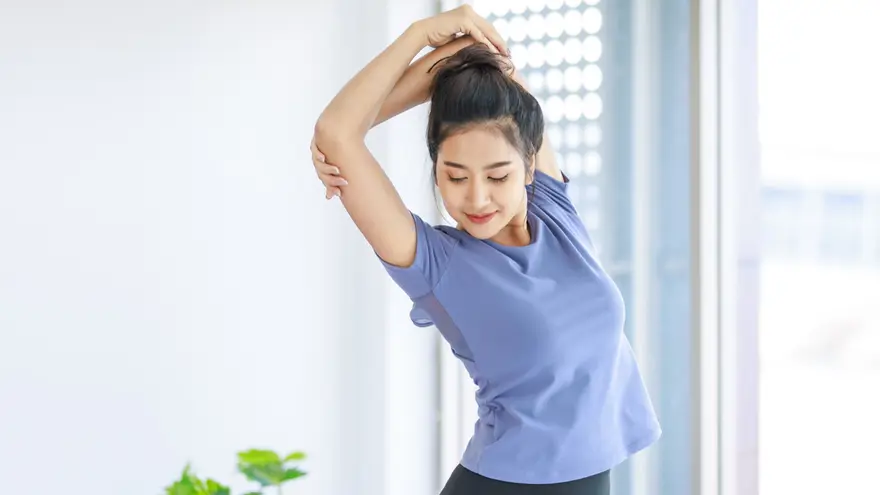
Body Contouring & Postural Correction · Needs Clinic Confirmation
Body Thread Lifting
Body Thread Lifting at Nucellin Orthopedic Clinic is a non-surgical service using absorbable medical threads — inserted with the clinic's proprietary technique.
Schedule a ConsultationBody Thread Lifting in Seoul

Medically reviewed by Dr. Heejun Kim, Board-Certified Orthopedic Surgeon, Chief Director, Nucellin Orthopedic Clinic · Nucellin Orthopedic Clinic, Seoul
Body Thread Lifting at Nucellin Orthopedic Clinic is a non-surgical service using absorbable medical threads — inserted with the clinic's proprietary technique — intended to provide mechanical lifting of soft tissue, stimulate collagen production, and improve body contour for patients with mild to moderate skin laxity who are not seeking, or are not candidates for, a surgical body-lift procedure.
What Is Body Thread Lifting?
Nucellin Orthopedic Clinic describes Body Thread Lifting as a minimally invasive, non-surgical treatment that uses absorbable threads — such as PDO (polydioxanone), PLLA (poly-L-lactic acid), or PCL (polycaprolactone) — inserted beneath the skin using the clinic's proprietary technique. According to the clinic, the threads are placed into muscle and ligament tissue rather than removing tissue surgically, providing mechanical lifting while the threads gradually dissolve over approximately one year. As they absorb, the clinic states the threads stimulate collagen production, strengthen tissue support, improve blood circulation, increase skin elasticity, relieve pain, and support a healthier body contour. This page describes the procedure honestly as a modest, temporary aesthetic and supportive intervention rather than a substitute for surgical body-lift procedures — a distinction the clinic's own material also draws directly.
What Independent Evidence Says
Independent dermatology literature confirms that thread lifting using absorbable sutures is a real, actively practiced technique with a documented history, though the evidence base for its long-term effectiveness remains limited. According to expert commentary presented at a Masters of Aesthetics Symposium and reported in MDedge Dermatology, thread lifts were first popularized in the 1990s using non-absorbable, barbed polypropylene threads. Those earlier devices caused adverse events including thread extrusion, migration, expulsion, skin dimpling, granuloma formation, and prolonged pain — problems serious enough that the US Food and Drug Administration withdrew its approval of contour thread aesthetic procedures in 2009. It is important to note this distinction directly: Nucellin's current program uses newer-generation absorbable materials (PDO, PLLA, PCL), not the non-absorbable threads implicated in the earlier FDA action, and the clinic's program operates under Korean, not US, medical regulation.
The renewed interest in thread lifting has been driven specifically by absorbable PDO and PLLA sutures, which the same independent source describes as producing fewer complications than the earlier non-absorbable generation, with more predictable lifting because tissue is physically anchored rather than tightened through indirect, energy-based methods. Mechanistically, independent reporting explains that threads are anchored using barbs that catch in adipose tissue; as the thread is placed under tension in the dermis and surrounding tissue, this creates a fibrous adhesion capsule that helps hold the lift in place, and the resulting fibrosis is understood to increase local collagen production. PDO is described as biodegrading through hydrolysis over roughly four to eight months and causing neocollagenesis via a foreign-body tissue reaction, while PLLA — also used separately as an injectable aesthetic filler — is described as a longer-acting collagen stimulator, with a known complication of subcutaneous nodules and late-onset granulomas when used in filler form.
Independent commentary is candid that the overall evidence supporting thread lifts is still developing: existing clinical studies have short follow-up periods, and there is no standardized protocol across different thread types, insertion techniques, or target areas, which limits confident conclusions about how long results last in any individual patient. This same source describes a Korean laboratory study, published in early 2019, that compared powdered PDO and PLLA injections in an animal model and found both produced collagen formation and a granulomatous tissue reaction, though this effect had measurably decreased by twelve weeks; PDO produced somewhat more collagen formation than PLLA in that specific study. This is genuinely useful context for how thread-stimulated collagen response is understood to behave over time, though it should be read as early-stage, non-clinical evidence about mechanism rather than a guarantee of the visible, lasting result any individual patient will experience.
How the Procedure Works at Nucellin Orthopedic Clinic
Nucellin Orthopedic Clinic states that the Body Thread Lifting procedure itself takes approximately 30 minutes, with a total visit — including anesthesia and post-treatment care — of about two hours. The clinic describes the treatment as comfortable and virtually painless, performed using its proprietary technique for placing absorbable threads into muscle and ligament tissue. As the threads gradually dissolve over approximately one year, the clinic states this supports collagen production, tissue strengthening, and improved circulation over that period, rather than producing all of its effect immediately at the time of the procedure. The clinic's published material does not provide a detailed step-by-step account of thread placement, gauge, thread count, or specific technique beyond describing it as proprietary; specific procedural details are addressed individually during consultation.
Who Is a Good Candidate for This Program?

Nucellin Orthopedic Clinic's material frames Body Thread Lifting as intended for adults with mild to moderate skin laxity who want subtle body-contour improvement and are not seeking, or are not suitable candidates for, a surgical body-lift procedure. Independent dermatology guidance is consistent with this framing at a general level: patients with moderate skin sagging and reasonably good, moderately thick skin quality are generally described as better candidates for thread-based lifting than patients with severe skin laxity, where the mechanical lifting a thread can provide is unlikely to be sufficient. The clinic's own material is explicit that thread lifting provides modest, temporary improvement rather than results comparable to surgery, and that setting realistic expectations at consultation is part of appropriate candidacy screening. Because the clinic's published material does not provide detailed exclusion criteria specific to body (as opposed to facial) thread placement, individual candidacy — including any relevant skin, tissue, or medical history factors — is confirmed directly with Dr. Kim.
Risks and Honest Limitations
This page aims to present thread lifting honestly rather than only through its marketed benefits. Independent dermatology sources describe a documented set of possible adverse events associated with thread-lift procedures generally, including temporary post-procedure tenderness lasting one to two weeks, bruising most often related to the anesthesia injection itself, and a risk of temporary skin dimpling at insertion points. Thread extrusion — where the end of a thread becomes visible or breaks through the skin surface — remains a recognized risk, which independent commentary notes can be reduced through careful technique, such as ensuring the thread end is fully buried subcutaneously, but not eliminated entirely. Independent sources are also candid that because study follow-up periods have generally been short and thread-lift protocols are not standardized across techniques and thread types, patients should not expect guaranteed, uniform, or permanent results, and should understand that any lifting effect is inherently temporary given that the threads themselves are designed to fully absorb over time. Nucellin Orthopedic Clinic's own material aligns with this caution by describing the treatment's improvement as modest rather than surgical-grade, and this page does not represent Body Thread Lifting as risk-free or as producing guaranteed, permanent results.
What to Expect
Stage | What the clinic/independent sources state |
|---|---|
Procedure time | About 30 minutes; roughly 2 hours total including anesthesia and post-treatment care |
Comfort | Described by the clinic as comfortable and virtually painless |
Materials used | Absorbable threads — PDO, PLLA, or PCL — placed via the clinic's proprietary technique |
Placement | Into muscle and ligament tissue, according to the clinic, rather than surgical tissue removal |
Absorption timeline | Threads dissolve over approximately one year, per the clinic |
Independent evidence on collagen response | Supports thread-stimulated collagen formation, though a 2019 laboratory study found this effect declining by 12 weeks in an animal model |
Independent evidence on overall evidence quality | Described as still developing, with short follow-up periods and no standardized protocol across studies |
Known possible adverse events | Temporary tenderness, bruising, dimpling, and thread extrusion, per independent dermatology sources |
Nucellin Orthopedic Clinic's published material does not specify a detailed anesthesia protocol, thread count or gauge, specific insertion pattern, or an itemized recovery timeline for its body thread-lifting service specifically; these are addressed individually at consultation.
Why US and International Patients Consider This Program

International patients researching non-surgical body-contouring options often want an alternative to a longer-recovery surgical body lift, and Body Thread Lifting is positioned by the clinic as exactly that kind of lower-recovery option for appropriate candidates. Prospective patients evaluating this service from abroad should weigh, honestly, that independent evidence describes thread lifting as producing modest and temporary results rather than a substitute for surgery, which is consistent with how Nucellin Orthopedic Clinic itself frames the service. As with the clinic's other programs, independently verified US-patient testimonial evidence specific to Body Thread Lifting is still pending internal confirmation, so prospective patients are encouraged to raise this directly at consultation.
International patients can use the clinic's online reservation system to arrange a consultation, and the clinic publishes its address, operating hours, and travel guidance, including an airport limousine bus route from Incheon International Airport, driving directions, and valet parking.
Safety, Precision, and Clinic Standards
Nucellin Orthopedic Clinic states that its proprietary technique is designed to minimize side effects and recovery time while promoting natural tissue regeneration as the threads dissolve.
Independent evidence indicates today's absorbable PDO/PLLA/PCL thread technology is a materially different generation from the non-absorbable, barbed threads implicated in the FDA's 2009 withdrawal of approval for contour thread aesthetic procedures in the United States; this page does not imply FDA approval, clearance, or endorsement of any device used at the clinic, and Nucellin Orthopedic Clinic operates under Korean, not US, medical regulation.
Independent dermatology sources describe a real, non-zero risk profile for thread-lift procedures generally, including tenderness, bruising, dimpling, and extrusion; this page does not represent the procedure as risk-free.
Nucellin Orthopedic Clinic's published material does not specify a complication rate specific to its own body thread-lifting patients; this is reviewed individually before treatment.
Nucellin Orthopedic Clinic is a Registered Medical Institution for Attracting Foreign Patients, certified by Korea's Ministry of Health and Welfare (Business Registration Number 252-08-03394).
The Bottom Line
Body Thread Lifting uses absorbable PDO, PLLA, or PCL threads, placed via Nucellin's proprietary technique into muscle and ligament tissue, and is intended for mild to moderate skin laxity rather than as a surgical-lift substitute.
The clinic states the threads dissolve over roughly one year, supporting collagen production, tissue strengthening, and circulation as they absorb.
Independent dermatology sources confirm thread lifting is a real, practiced technique, but describe the supporting evidence as still developing, with short study follow-up periods and no standardized protocol.
Documented possible risks include temporary tenderness, bruising, dimpling, and thread extrusion; results are inherently temporary given that the threads themselves fully absorb over time.
Candidacy, thread type, and realistic expected outcomes are confirmed individually during a consultation with Dr. Kim.
Frequently Asked Questions
Am I a suitable candidate for Body Thread Lifting? Nucellin Orthopedic Clinic describes suitable candidates as adults with mild to moderate skin laxity seeking subtle body-contour improvement who are not seeking, or are not candidates for, a surgical body-lift procedure. Independent guidance is broadly consistent, describing patients with moderate rather than severe skin sagging as generally better suited to thread-based lifting.
Can Body Thread Lifting help tighten loose skin after weight loss? Nucellin Orthopedic Clinic frames the service around mild to moderate skin laxity and body contouring generally; the clinic's published material does not specifically address post-weight-loss skin laxity as a distinct indication, so this is best confirmed directly at consultation.
Is Body Thread Lifting painful? Nucellin Orthopedic Clinic describes the procedure as comfortable and virtually painless. Independent sources note that post-procedure tenderness lasting one to two weeks and bruising, mostly related to the anesthesia, are common and expected.
How long does Body Thread Lifting last? Nucellin Orthopedic Clinic states the threads dissolve over approximately one year. Independent dermatology sources are candid that because most studies have short follow-up periods, how long the visible lifting effect itself persists for a given patient is not firmly established, and results are understood to be modest and temporary rather than permanent.
What type of threads are used for Body Thread Lifting? Nucellin Orthopedic Clinic states it uses absorbable threads, including PDO, PLLA, or PCL, placed with its proprietary technique.
Is Body Thread Lifting performed safely at Nucellin Orthopedic Clinic, and what are the risks? The clinic states its proprietary technique is designed to minimize side effects and recovery time. Independent sources describe a documented, non-zero risk profile for thread lifting generally, including tenderness, bruising, temporary dimpling, and thread extrusion; this page presents that honestly rather than describing the procedure as risk-free.
How does Body Thread Lifting compare with surgical body-lift procedures? Nucellin Orthopedic Clinic and independent sources are aligned here: thread lifting provides mechanical lifting and collagen stimulation with a shorter recovery than surgery, but produces modest, temporary improvement rather than results comparable to a surgical body lift.
Do I need a referral before starting Body Thread Lifting? Nucellin Orthopedic Clinic's process begins directly with a physician consultation with Dr. Kim; the clinic's published material does not describe a referral requirement, though international patients are encouraged to confirm current intake steps when booking.
Book a Consultation at Nucellin Orthopedic Clinic
To discuss whether Body Thread Lifting is right for your goals, book a consultation with Dr. Heejun Kim at Nucellin Orthopedic Clinic, or learn more about the clinic and Dr. Kim beforehand.
Disclaimer
This page is for general informational purposes and does not constitute individualized medical advice. Candidacy, thread selection, and realistic expected outcomes can only be determined through a consultation with a qualified physician.
Sources & Further Reading
Other Services
Explore additional treatments offered by our specialists.
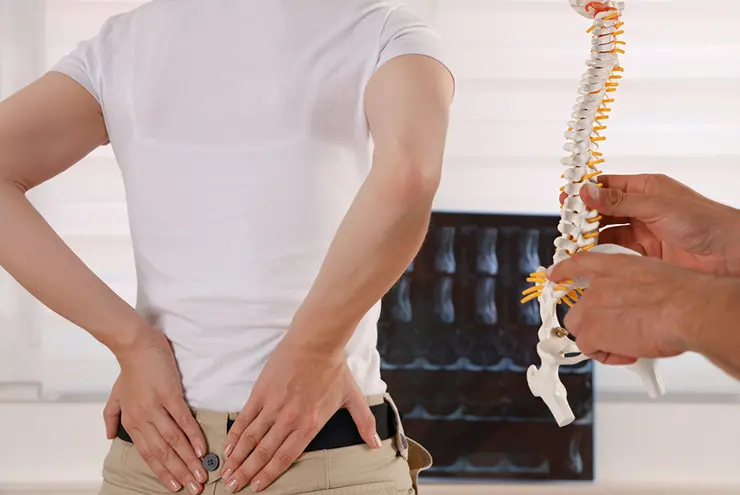
QMR Regenerative Manual Therapy
QMR Regenerative Manual Therapy at Nucellin Orthopedic Clinic combines Telea Medical's QMR (Quantum Molecular Resonance) technology, sourced from Italy, with hands-on manual therapy as part of the clinic's regenerative joint and spine treatment program.
Learn More
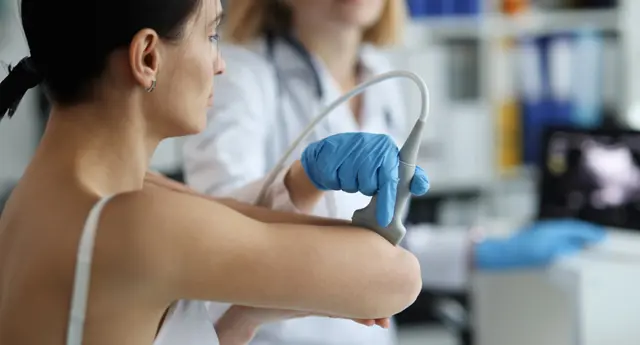
Musculoskeletal Ultrasound Evaluation
Musculoskeletal Ultrasound Evaluation is used by Nucellin Orthopedic Clinic as part of its musculoskeletal assessment process, providing real-time, non-invasive imaging of muscles, tendons, ligaments, nerves, and joints using the clinic's Philips EPIQ 5.
Learn More
Personalized Rehabilitation Therapy
Personalized Rehabilitation Therapy at Nucellin Orthopedic Clinic combines physician-directed diagnosis with Telea Medical QMR (Quantum Molecular Resonance) technology and hands-on manual therapy.
Learn More