Personalized Medical Care & Dedicated International Patient Concierge

Regenerative Joint & Spine Treatment · Needs Clinic Confirmation
Focused & Radial Shockwave Therapy (ESWT)
Focused & Radial Shockwave Therapy (ESWT) is a non-surgical regenerative physical therapy offered at Nucellin Orthopedic Clinic within its joint and spine regeneration program, combining focused shockwaves for deep tissue and radial shockwaves for.
Schedule a ConsultationFocused & Radial Shockwave Therapy (ESWT) in Seoul
Medically reviewed by Dr. Heejun Kim, Board-Certified Orthopedic Surgeon, Chief Director, Nucellin Orthopedic Clinic · Nucellin Orthopedic Clinic, Seoul
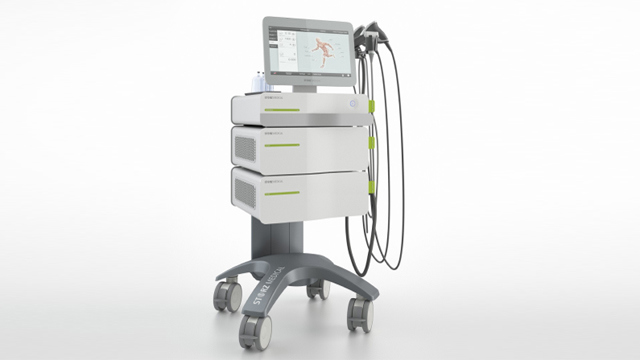
Focused & Radial Shockwave Therapy (ESWT) is a non-surgical regenerative physical therapy offered at Nucellin Orthopedic Clinic within its joint and spine regeneration program, combining focused shockwaves for deep tissue and radial shockwaves for superficial tissue on Swiss STORZ MEDICAL Ultra SD1 equipment.
What Is Shockwave Therapy (ESWT)?
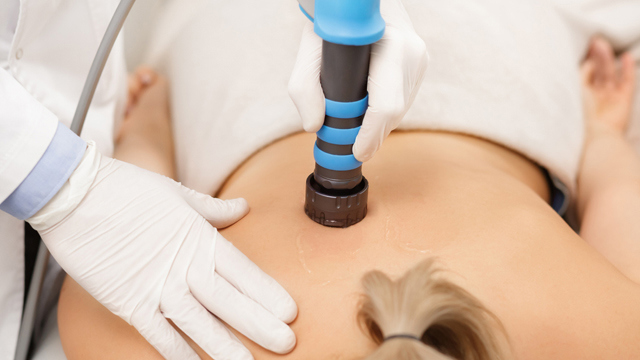
Nucellin Orthopedic Clinic provides Shockwave (ESWT) as a non-surgical regenerative physical therapy intended to promote recovery and restore function. The clinic uses a Swiss STORZ MEDICAL Ultra SD1 system capable of delivering both focused shockwaves — which reach deep tissue structures — and radial shockwaves, which treat broader, more superficial areas. The clinic states this dual-mode approach is intended to provide broader regenerative stimulation than a single shockwave modality alone, and that treatment is delivered as a warm, comfortable sensation without pain or discomfort.
What Independent Evidence Says
The International Society for Medical Shockwave Treatment (ISMST) — the specialty's own international professional body — publishes formal indications and contraindications for extracorporeal shockwave therapy (ESWT), offering an independent reference point for what is and is not well-established. ISMST classifies chronic tendinopathies as approved standard indications, specifically including calcifying tendinopathy of the shoulder, lateral epicondylopathy of the elbow (tennis elbow), greater trochanter pain syndrome, patellar tendinopathy, Achilles tendinopathy, and plantar fasciitis with or without heel spur — all conditions Nucellin lists among its own candidate conditions for ESWT. ISMST also lists several bone pathologies (including delayed bone healing and stress fracture) as approved indications, and identifies knee osteoarthritis, rotator cuff tendinopathy without calcification, and several other conditions as "common empirically-tested clinical uses" — a distinct, less strongly established evidence tier. ISMST guidelines also specify clear prerequisites for proper use: clinical examination and radiological imaging before treatment, and that only a qualified, certified physician should use focused shockwave therapy to treat pathologies confirmed by diagnostic testing.
This independent classification system is a useful frame for understanding where Nucellin's own listed candidate conditions sit: several — frozen shoulder, tennis elbow, golfer's elbow (a form of medial epicondylopathy, listed by ISMST as a common empirically-tested use rather than an approved standard indication), knee osteoarthritis, patellar tendinitis, Achilles tendinitis, and plantar fasciitis — map onto ISMST's approved or commonly-used indication categories, while others (such as calcific tendinitis of the shoulder, listed by ISMST as an approved indication) are also independently well-supported. This does not independently confirm Nucellin's own outcomes for its patients, but it does show that the general clinical rationale for using ESWT across these conditions is grounded in established international guidelines rather than being unique or unverified.
ISMST's Full Indication Framework, in Context
ISMST organizes ESWT indications into four tiers, which is useful context for understanding how strongly any given condition is supported. "Approved standard indications" — the strongest tier — include chronic tendinopathies such as calcifying tendinopathy of the shoulder, tennis elbow, greater trochanter pain syndrome, patellar tendinopathy, Achilles tendinopathy, and plantar fasciitis, along with several bone pathologies including delayed bone healing, bone non-union, and stress fracture. "Common empirically-tested clinical uses" — a second tier, still well-used clinically but with a different evidence status — include rotator cuff tendinopathy without calcification, medial epicondylopathy (golfer's elbow), knee osteoarthritis, and myofascial syndrome, among others. Beyond these, ISMST also lists "exceptional indications — expert indications" and "experimental indications" for a range of other conditions under active investigation, which are not part of Nucellin's own stated candidate list for this service.
Placing Nucellin's candidate conditions against this framework shows that the great majority sit within ISMST's top two, best-established tiers: frozen shoulder and calcific tendinitis relate to ISMST's approved shoulder-tendinopathy category; tennis elbow sits in the approved tier while golfer's elbow (medial epicondylopathy) sits in the common empirically-tested tier; knee osteoarthritis, patellar tendinitis, Achilles tendinitis, and plantar fasciitis are each explicitly named in one of ISMST's first two tiers. This is a meaningful independent signal that the general clinical use of ESWT for these conditions is grounded in established international consensus, even though it does not substitute for Nucellin's own outcomes data.
Who Performs This at Nucellin Orthopedic Clinic
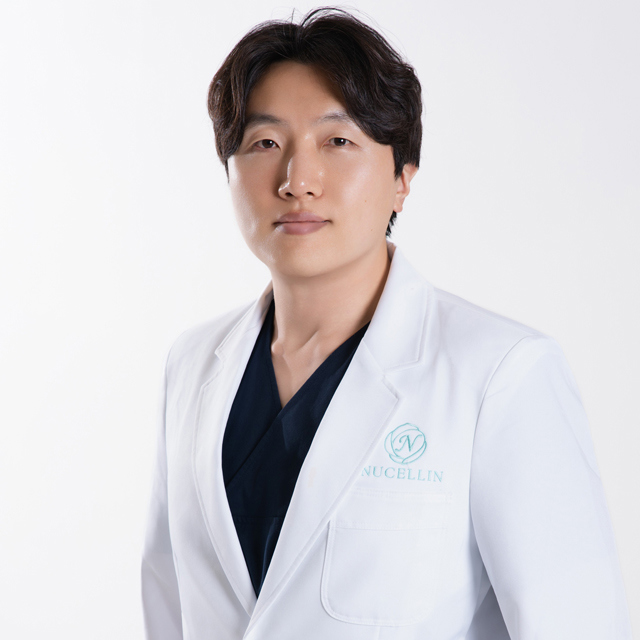
Dr. Heejun Kim, the clinic's Chief Director
Board-certified orthopedic surgeon
Dr. Heejun Kim, the clinic's Chief Director and a board-certified orthopedic surgeon trained at Yonsei University College of Medicine and Yonsei University Severance Hospital, personally performs the consultation, identifies the source of pain through precise diagnosis, determines the treatment area, and establishes an individualized treatment plan before shockwave therapy is applied.
Who Is a Good Candidate for This Program?
Nucellin Orthopedic Clinic indicates Focused & Radial Shockwave Therapy (ESWT) for patients with musculoskeletal disorders including frozen shoulder, rotator cuff tear, shoulder impingement syndrome, calcific tendinitis, wrist tenosynovitis, tennis elbow, golfer's elbow, lumbar ligament injury, knee osteoarthritis, patellar tendinitis, chondromalacia, Achilles tendinitis, plantar fasciitis, ankle ligament injury, and other tendon or ligament disorders requiring pain relief and tissue regeneration. As noted above, several of these conditions correspond directly to ISMST's own approved-indication or common-use categories for ESWT, lending independent support to the clinic's candidate list. The clinic's published material does not specify who should avoid or postpone treatment; ISMST's own published contraindications include malignant tumor, pregnancy, and pacemaker/defibrillator devices within the shockwave field, among others, and these general safety considerations are reviewed individually at consultation.
How the Procedure Itself Works
Consultation and diagnosis. Dr. Kim personally identifies the source of pain through precise diagnosis.
Personalized treatment planning. An individualized plan determines which tissue depth (focused vs. radial) and treatment area are appropriate.
Shockwave therapy applied to the treatment area. The clinic states this is delivered as a warm, comfortable sensation without pain or discomfort, using dual-mode focused and radial technology.
Follow-up evaluation. The clinic includes a follow-up step as part of its documented ESWT process.
Focused vs. Radial: Why Both Modes Are Used
Nucellin Orthopedic Clinic's dual-mode approach combines Focused Shockwave, which delivers energy to deep tissue structures, with Radial Shockwave, which treats broader superficial areas. The clinic states this combination is intended to provide broader regenerative stimulation — reaching both deep structures such as certain tendon insertions and more superficial soft tissue — than relying on a single shockwave modality. ISMST's own technical guidance similarly distinguishes between focused generators, which it recommends specifically for treating calcifications and bone pathologies at high energy with positioning technology, and devices with or without focusing technology for superficial soft tissue conditions, underscoring that the choice of modality is a clinically meaningful decision rather than an arbitrary equipment preference.
What to Expect
Stage | What the clinic states |
|---|---|
Diagnosis | Physician-led identification of the pain source and treatment planning |
Technology | Swiss STORZ MEDICAL Ultra SD1, dual-mode focused + radial shockwave |
Sensation | Warm and comfortable, without pain or discomfort, per the clinic |
Combination options | May be combined with regenerative injection therapy, stem cell therapy, and QMR therapy |
Independent evidence (ISMST) | Several candidate conditions (tennis elbow, plantar fasciitis, Achilles tendinopathy, patellar tendinopathy, calcifying shoulder tendinopathy) are ISMST-approved standard indications; others (knee OA, golfer's elbow) are common empirically-tested uses |
Nucellin Orthopedic Clinic's published material does not specify a fixed number of sessions, detailed recovery timeline, or specific pre- and post-treatment instructions; these are addressed individually based on the diagnosed condition.
Why US and International Patients Consider This Program
International patients researching non-surgical shockwave therapy generally want to understand which conditions are genuinely well-supported by independent guidelines versus which are more exploratory, and value a physician-led diagnostic process before treatment begins. Nucellin Orthopedic Clinic frames this service around exactly that structure, with Dr. Kim personally determining the diagnosis and treatment plan. As with the clinic's other programs, independently verified US-patient testimonial evidence specific to this service is still pending internal confirmation, so prospective patients are encouraged to raise this directly at consultation.
International patients can use the clinic's online reservation system to arrange a consultation, and the clinic publishes its address, operating hours, and travel guidance, including an airport limousine bus route from Incheon International Airport, driving directions, and valet parking.
Safety, Precision, and Clinic Standards
Treatment is based on precise diagnosis by the head doctor and uses customized regenerative rehabilitation, applying focused and radial shockwaves according to the patient's condition.
ISMST guidelines specify that only a qualified, certified physician should use focused shockwave therapy to treat pathologies confirmed by diagnostic testing, and require clinical examination and radiological imaging beforehand — standards consistent with Nucellin's physician-led diagnostic process.
ISMST's published contraindications include malignant tumor, pregnancy, and pacemaker/defibrillator devices within the shockwave treatment field, among other condition-specific limitations; these are reviewed individually before treatment.
Nucellin Orthopedic Clinic is a Registered Medical Institution for Attracting Foreign Patients, certified by Korea's Ministry of Health and Welfare (Business Registration Number 252-08-03394).
Because this program is delivered under Korean, not US, medical regulation, this page does not imply FDA approval or clearance for any device used at the clinic.
Nucellin Orthopedic Clinic does not publish a detailed complication rate specific to its own ESWT patients; general risk factors and any specific to a given patient's medical history are reviewed individually before proceeding.
The Bottom Line
Shockwave Therapy (ESWT) at Nucellin Orthopedic Clinic combines focused and radial shockwave modes on Swiss STORZ MEDICAL equipment for broader regenerative stimulation across tissue depths.
Independent ISMST guidelines classify several of the clinic's candidate conditions — tennis elbow, plantar fasciitis, Achilles tendinopathy, patellar tendinopathy, and calcifying shoulder tendinopathy — as approved standard indications, with others (knee osteoarthritis, golfer's elbow) as common empirically-tested uses.
Treatment is described as a warm, comfortable sensation without pain, delivered after physician-led diagnosis and individualized planning.
ESWT may be combined with regenerative injection therapy, stem cell therapy, and QMR therapy as part of an individualized treatment plan.
Candidacy and expected outcomes are confirmed during a consultation with Dr. Kim.
Frequently Asked Questions
Who is a good candidate for Shockwave Therapy (ESWT)? The clinic indicates ESWT for musculoskeletal disorders including frozen shoulder, rotator cuff tear, shoulder impingement, calcific tendinitis, wrist tenosynovitis, tennis elbow, golfer's elbow, lumbar ligament injury, knee osteoarthritis, patellar tendinitis, chondromalacia, Achilles tendinitis, plantar fasciitis, and ankle ligament injury.
Is ESWT painful? The clinic states that its premium Shockwave (ESWT) therapy provides a warm and comfortable sensation during treatment without pain or discomfort.
How does the clinic reduce risk during ESWT? Treatment is based on precise diagnosis by the head doctor and customized regenerative rehabilitation, using premium Swiss STORZ MEDICAL equipment with focused and radial shockwaves applied according to the patient's condition.
Can ESWT be combined with another treatment? Yes — the clinic states that Shockwave (ESWT) can be combined with regenerative injection therapy, stem cell therapy, and QMR therapy to maximize tissue regeneration and recovery.
How is dual-mode shockwave different from a single-modality device? The clinic's dual-mode approach combines Focused Shockwave for deep tissue treatment with Radial Shockwave for superficial tissues, intended to provide broader regenerative stimulation than a single modality alone — a distinction also reflected in ISMST's own technical guidance on when focused versus non-focused devices are appropriate.
Will the doctor or team speak my language? Yes — the clinic states an English-speaking team is available to support international patients.
What does independent research say about which conditions ESWT works best for? ISMST, the field's international professional society, classifies chronic tendinopathies (including tennis elbow, Achilles tendinopathy, patellar tendinopathy, calcifying shoulder tendinopathy, and plantar fasciitis) as approved standard indications, and lists knee osteoarthritis and rotator cuff tendinopathy without calcification, among others, as common empirically-tested clinical uses — a distinct, still-developing evidence tier worth understanding when discussing your specific condition with Dr. Kim.
Are there people who should not receive ESWT? ISMST's published contraindications include malignant tumor, pregnancy, and pacemaker/defibrillator devices within the treatment field, along with several other condition-specific limitations depending on the shockwave intensity and technique used. Nucellin's published material does not detail its own exclusion criteria beyond this, so any personal contraindications are reviewed individually before treatment.
Do I need a referral before starting ESWT? Nucellin Orthopedic Clinic's process begins directly with a physician consultation with Dr. Kim, who personally identifies the pain source before recommending shockwave therapy; the clinic's published material does not describe a referral requirement, though international patients are encouraged to confirm current intake steps when booking.
How many ESWT sessions are typically needed? Nucellin Orthopedic Clinic's published material does not specify a fixed session count; ISMST's guidelines note that protocols vary by condition, energy level, and modality (focused vs. radial), and the specific course of treatment at Nucellin is determined individually based on the diagnosis.
Book a Consultation at Nucellin Orthopedic Clinic
To discuss whether Shockwave Therapy (ESWT) is right for your condition, book a consultation with Dr. Heejun Kim at Nucellin Orthopedic Clinic, or learn more about the clinic and Dr. Kim beforehand.
Disclaimer
This page is for general informational purposes and does not constitute individualized medical advice. Candidacy, technique, and expected outcomes can only be determined through a consultation with a qualified physician.
Sources & Further Reading
Other Services
Explore additional treatments offered by our specialists.
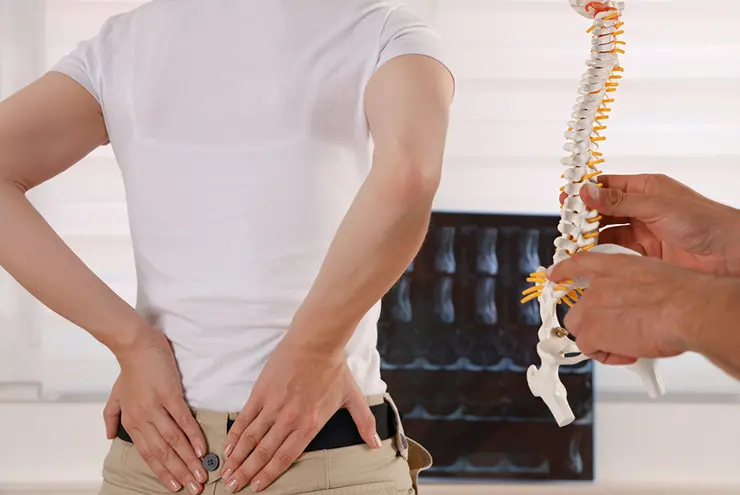
QMR Regenerative Manual Therapy
QMR Regenerative Manual Therapy at Nucellin Orthopedic Clinic combines Telea Medical's QMR (Quantum Molecular Resonance) technology, sourced from Italy, with hands-on manual therapy as part of the clinic's regenerative joint and spine treatment program.
Learn More
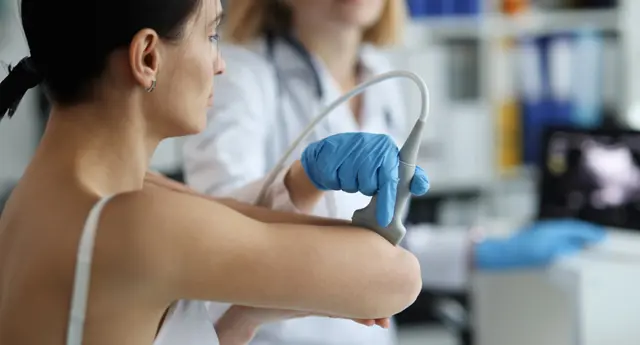
Musculoskeletal Ultrasound Evaluation
Musculoskeletal Ultrasound Evaluation is used by Nucellin Orthopedic Clinic as part of its musculoskeletal assessment process, providing real-time, non-invasive imaging of muscles, tendons, ligaments, nerves, and joints using the clinic's Philips EPIQ 5.
Learn More
Personalized Rehabilitation Therapy
Personalized Rehabilitation Therapy at Nucellin Orthopedic Clinic combines physician-directed diagnosis with Telea Medical QMR (Quantum Molecular Resonance) technology and hands-on manual therapy.
Learn More