Personalized Medical Care & Dedicated International Patient Concierge

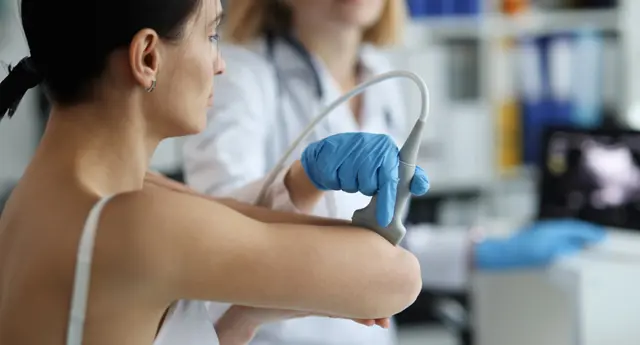
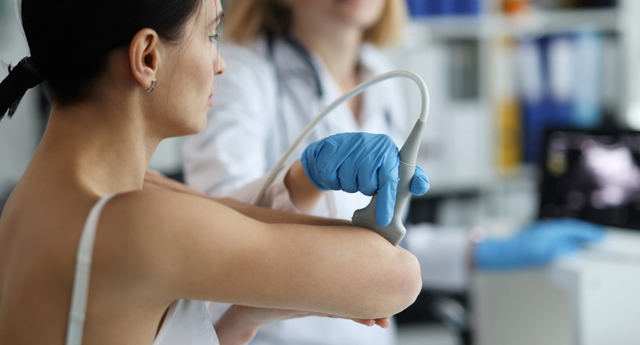
Ultrasound-Guided Diagnostics & Pain Management · Needs Clinic Confirmation
Musculoskeletal Ultrasound Evaluation
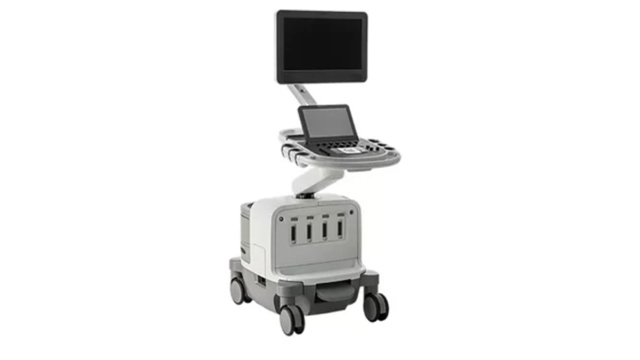
Musculoskeletal Ultrasound Evaluation is used by Nucellin Orthopedic Clinic as part of its musculoskeletal assessment process, providing real-time, non-invasive imaging of muscles, tendons, ligaments, nerves, and joints using the clinic's Philips EPIQ 5.
Schedule a ConsultationMusculoskeletal Ultrasound Evaluation in Seoul
Medically reviewed by Dr. Heejun Kim, Board-Certified Orthopedic Surgeon, Chief Director, Nucellin Orthopedic Clinic · Nucellin Orthopedic Clinic, Seoul
Musculoskeletal Ultrasound Evaluation is used by Nucellin Orthopedic Clinic as part of its musculoskeletal assessment process, providing real-time, non-invasive imaging of muscles, tendons, ligaments, nerves, and joints using the clinic's Philips EPIQ 5 ultrasound system.
What Is Musculoskeletal Ultrasound Evaluation?
Nucellin Orthopedic Clinic describes a comprehensive assessment involving a focused orthopedic examination and movement analysis, with ultrasound used when clinically indicated to help pinpoint the source of a patient's pain. According to the independent patient-education resource RadiologyInfo.org — published jointly by the Radiological Society of North America (RSNA) and the American College of Radiology (ACR) — musculoskeletal ultrasound imaging uses sound waves to produce pictures of muscles, tendons, ligaments, nerves, and joints, helping diagnose sprains, strains, tears, trapped nerves, arthritis, and other musculoskeletal conditions. It is safe, noninvasive, and does not use ionizing radiation.
What Independent Evidence Says
RadiologyInfo.org describes common diagnostic uses of musculoskeletal ultrasound that directly match the clinical picture Nucellin Orthopedic Clinic addresses: tendon tears or tendinitis (such as of the rotator cuff in the shoulder or the Achilles tendon in the ankle), muscle tears, masses, or fluid collections, ligament sprains or tears, inflammation or fluid within the bursae and joints, early changes of rheumatoid arthritis, and nerve entrapments such as carpal tunnel syndrome. Independent sources describe the benefits of musculoskeletal ultrasound as including its noninvasive nature (no needles or injections required for imaging alone), its real-time capability — which makes it a useful tool for guiding minimally invasive procedures such as needle biopsies and fluid aspiration — and its safety for patients with cardiac pacemakers or certain metallic implants, who often cannot safely undergo MRI. Independent sources also note that, compared with MRI, ultrasound can provide greater internal detail when assessing certain soft tissue structures such as tendons and nerves, in part because it captures images in real time and can show the movement of a structure such as a tendon or joint during motion, something a static MRI cannot do.
Independent sources also describe important limitations: ultrasound has difficulty penetrating bone, so it can generally only see the outer surface of bony structures rather than what lies within (except in infants, whose skeletons contain more cartilage). There are also limits to how deep sound waves can penetrate, meaning deeper structures in larger patients may be harder to visualize clearly — which is why physicians commonly use MRI to visualize the internal structure of bones or certain joints when ultrasound's limitations become clinically relevant.
How Ultrasound Imaging Actually Works
Independent sources describe ultrasound imaging as using a small probe called a transducer, together with gel placed directly on the skin. High-frequency sound waves travel from the probe through the gel into the body, and the probe then collects the sounds that bounce back from internal tissues; a computer uses these returning sound waves to construct an image. Because ultrasound captures images in real time, it can show not just the structure but the movement of the body's internal soft tissues — for example, a tendon gliding during a specific motion — and can also show blood flow through vessels using Doppler imaging techniques. This real-time, motion-capable quality is what distinguishes ultrasound from static imaging methods and is why it is particularly well suited to assessing dynamic musculoskeletal structures such as tendons and ligaments during movement, rather than only in a single fixed position.
Who Performs This at Nucellin Orthopedic Clinic
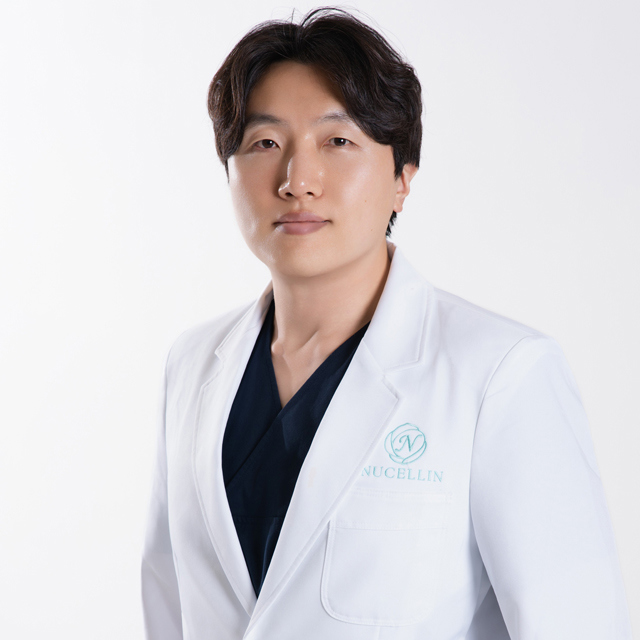
Dr. Heejun Kim, the clinic's Chief Director
Board-certified orthopedic surgeon
Nucellin Orthopedic Clinic states that the representative director personally evaluates patients, establishes diagnoses, determines treatment plans, and oversees key procedures — a physician-led diagnostic approach consistent with how the clinic integrates musculoskeletal ultrasound into its broader assessment process under Dr. Heejun Kim, a board-certified orthopedic surgeon trained at Yonsei University College of Medicine and Yonsei University Severance Hospital.
Who Is a Good Candidate for This Program?

Nucellin Orthopedic Clinic describes musculoskeletal ultrasound as part of its precision diagnostic process for patients with musculoskeletal pain, sports injuries, tendon disorders, ligament injuries, joint pain, nerve-related symptoms, and patients requiring evaluation before regenerative or rehabilitation treatment. This aligns closely with the independent diagnostic applications described above — tendon tears, muscle injuries, ligament sprains, joint effusions, and nerve entrapments. The clinic's published material does not specify who should avoid this evaluation, and independent sources note standard diagnostic ultrasound has no known harmful effects, making it broadly applicable as a diagnostic tool.
How the Procedure Itself Works
Focused orthopedic assessment. A clinical examination is performed.
Movement analysis. The patient's movement patterns are assessed as part of the evaluation.
Ultrasound examination when clinically indicated. Real-time imaging of the relevant muscles, tendons, ligaments, or joints is performed using the Philips EPIQ 5 system.
Findings incorporated into the treatment plan. Results directly inform the individualized treatment strategy that follows.
Diagnostic musculoskeletal ultrasound examinations generally do not require anesthesia, and no clinic-specific anesthesia protocol beyond this general practice was published.
Ultrasound Compared to Other Imaging at Nucellin
Nucellin Orthopedic Clinic describes ultrasound alongside MRI and X-ray review as part of its musculoskeletal assessment approach. Musculoskeletal ultrasound provides real-time dynamic imaging of tendons, ligaments, muscles, nerves, and joints, allowing assessment during movement, while MRI provides broader soft-tissue evaluation but is not dynamic; the choice between them depends on the specific clinical indication. Independent sources confirm this general distinction, noting ultrasound's dynamic, real-time strength alongside its bone-penetration and depth limitations relative to MRI.
What to Expect
Stage | What the clinic/independent sources state |
|---|---|
Technology | Philips EPIQ 5 ultrasound system |
Sensation | Non-invasive; independent sources note ultrasound scanning should not be painful |
Duration | Diagnostic ultrasound generally requires no downtime or recovery, per independent sources |
Results | Real-time visualization during acquisition; formal reporting timeframe not published by the clinic |
Independent evidence | RadiologyInfo.org (RSNA/ACR) confirms diagnostic accuracy for tendon tears, ligament sprains, joint effusions, and nerve entrapments, with noted limitations for deep or bony structures |
Findings from the ultrasound evaluation are directly incorporated into the patient's broader individualized treatment plan, which may include regenerative injections, rehabilitation, shockwave therapy, or other orthopedic treatments offered at the clinic.
Why US and International Patients Consider This Program
International patients researching diagnostic imaging options generally want to understand how ultrasound compares to MRI or X-ray for their specific concern, and value a physician-led diagnostic process that integrates imaging findings directly into treatment planning. Nucellin Orthopedic Clinic frames this evaluation around exactly that structure, with Dr. Kim personally overseeing diagnosis. As with the clinic's other programs, independently verified US-patient testimonial evidence specific to this service is still pending internal confirmation, so prospective patients are encouraged to raise this directly at consultation.
International patients can use the clinic's online reservation system to arrange a consultation, and the clinic publishes its address, operating hours, and travel guidance, including an airport limousine bus route from Incheon International Airport, driving directions, and valet parking.
Safety, Precision, and Clinic Standards

Nucellin Orthopedic Clinic describes physician-led diagnosis using imaging and physical assessment to identify the exact source of pain and guide treatment planning, with ultrasound imaging allowing real-time visualization of musculoskeletal structures during evaluation.
Independent sources (RSNA/ACR) confirm standard diagnostic ultrasound has no known harmful effects, does not use ionizing radiation, and is safe even for patients with pacemakers or certain metallic implants who cannot safely undergo MRI.
Diagnostic ultrasound systems are regulated medical devices in the United States and may be cleared through FDA regulatory pathways; Nucellin Orthopedic Clinic has not published device-specific FDA information for its own equipment.
Nucellin Orthopedic Clinic is a Registered Medical Institution for Attracting Foreign Patients, certified by Korea's Ministry of Health and Welfare (Business Registration Number 252-08-03394).
Because this program is delivered under Korean, not US, medical regulation, this page does not imply FDA clearance status for the specific device used at the clinic.
The Bottom Line
Musculoskeletal Ultrasound Evaluation at Nucellin uses the Philips EPIQ 5 system for real-time, non-invasive imaging integrated into a physician-led diagnostic process.
Independent sources (RSNA/ACR) confirm ultrasound's diagnostic value for tendon tears, muscle injuries, ligament sprains, joint effusions, and nerve entrapments — matching the clinical picture the clinic addresses.
Ultrasound's real-time, dynamic imaging is a genuine advantage over MRI for assessing structures during movement, though it has known limitations for bone and very deep structures.
Findings are directly incorporated into the clinic's broader treatment planning, including regenerative and rehabilitation options.
Candidacy and the most appropriate diagnostic approach for a given concern are confirmed during a consultation with Dr. Kim.
Frequently Asked Questions
Who is a good candidate for musculoskeletal ultrasound evaluation? The clinic describes this as part of its precision diagnostic process for patients with musculoskeletal pain, sports injuries, tendon disorders, ligament injuries, joint pain, nerve-related symptoms, and those requiring evaluation before regenerative or rehabilitation treatment.
Is musculoskeletal ultrasound painful? No — it is a non-invasive imaging examination. Independent sources note that diagnostic ultrasound uses sound waves and does not involve injections or radiation during routine imaging, and while occasionally temporarily uncomfortable, it should not be painful.
What anesthesia is used? Diagnostic musculoskeletal ultrasound examinations generally do not require anesthesia.
Is there a recovery period? No — diagnostic musculoskeletal ultrasound normally does not require recovery because it is a non-invasive imaging examination.
How is this different from MRI? Musculoskeletal ultrasound provides real-time dynamic imaging of tendons, ligaments, muscles, nerves, and joints and allows assessment during movement, while MRI provides broader soft-tissue evaluation but is not dynamic. Independent sources confirm ultrasound cannot see well into bone or very deep structures, where MRI is typically preferred.
Can this be combined with other procedures? Nucellin Orthopedic Clinic uses ultrasound evaluation as part of a broader diagnostic process that may guide regenerative injections, rehabilitation, shockwave therapy, or other orthopedic treatments.
Will the doctor or team speak my language? The clinic's published material does not specify language support details for this specific service; international patients are encouraged to confirm this directly when booking.
Does this evaluation replace the need for MRI or X-ray? Not necessarily. Nucellin Orthopedic Clinic uses ultrasound alongside MRI and X-ray review as part of its broader assessment approach, with the specific imaging method chosen based on the clinical question being answered rather than ultrasound replacing other modalities outright.
What results are realistic from this evaluation? Realistic outcomes include identification of tendon tears, ligament injuries, bursitis, fluid collections, nerve entrapment, muscle injuries, and inflammatory changes, providing guidance for treatment planning. Diagnostic ultrasound helps support clinical decision-making but does not itself treat the underlying condition.
Do I need a referral for a musculoskeletal ultrasound evaluation? Nucellin Orthopedic Clinic's process begins directly with a physician-led orthopedic assessment, with ultrasound used as needed based on that evaluation; the clinic's published material does not describe a referral requirement, though international patients are encouraged to confirm current intake steps when booking.
Book a Consultation at Nucellin Orthopedic Clinic
To discuss whether musculoskeletal ultrasound evaluation is right for your condition, book a consultation with Dr. Heejun Kim at Nucellin Orthopedic Clinic, or learn more about the clinic and Dr. Kim beforehand.
Disclaimer
This page is for general informational purposes and does not constitute individualized medical advice. Candidacy, technique, and expected outcomes can only be determined through a consultation with a qualified physician, who can also confirm whether ultrasound or another imaging method is most appropriate for your specific concern.
Sources & Further Reading
Other Services
Explore additional treatments offered by our specialists.

QMR Regenerative Manual Therapy
QMR Regenerative Manual Therapy at Nucellin Orthopedic Clinic combines Telea Medical's QMR (Quantum Molecular Resonance) technology, sourced from Italy, with hands-on manual therapy as part of the clinic's regenerative joint and spine treatment program.
Learn More
Musculoskeletal Ultrasound Evaluation
Musculoskeletal Ultrasound Evaluation is used by Nucellin Orthopedic Clinic as part of its musculoskeletal assessment process, providing real-time, non-invasive imaging of muscles, tendons, ligaments, nerves, and joints using the clinic's Philips EPIQ 5.
Learn More

Personalized Rehabilitation Therapy
Personalized Rehabilitation Therapy at Nucellin Orthopedic Clinic combines physician-directed diagnosis with Telea Medical QMR (Quantum Molecular Resonance) technology and hands-on manual therapy.
Learn More