Personalized Medical Care & Dedicated International Patient Concierge

Specialty Overview
Ultrasound-Guided Diagnostics & Pain Management
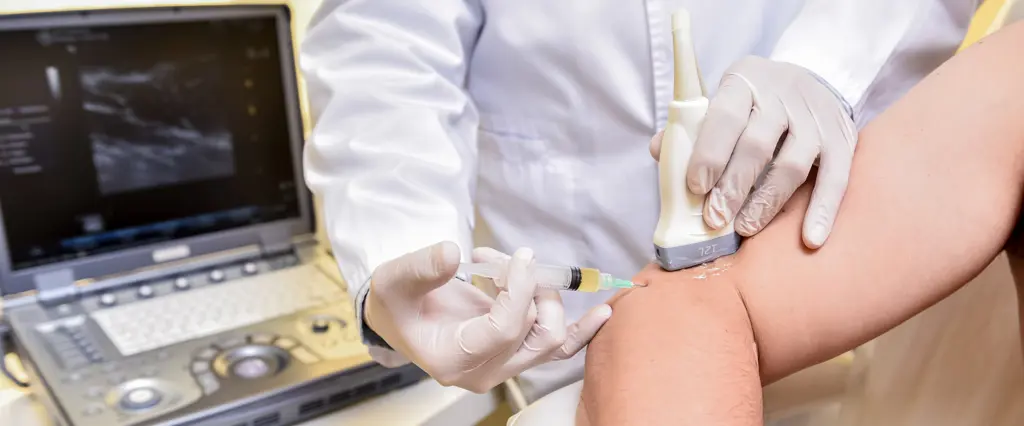
Ultrasound-Guided Diagnostics & Pain Management uses precise ultrasound imaging to identify the source of pain and guide personalized treatment.
Schedule a ConsultationUltrasound-Guided Diagnostics & Pain Management in Seoul
Medically reviewed by Dr. Heejun Kim, Board-Certified Orthopedic Surgeon, Chief Director, Nucellin Orthopedic Clinic · Nucellin Orthopedic Clinic, Seoul
Ultrasound-Guided Diagnostics & Pain Management is Nucellin Orthopedic Clinic's precision-first diagnostic approach to musculoskeletal pain: the medical director personally identifies the exact source of pain using ultrasound imaging before recommending any specific treatment, rather than simply treating a general region by default.
What Is Ultrasound-Guided Diagnostics & Pain Management?
Nucellin Orthopedic Clinic provides precision diagnosis and individualized pain treatment as part of its non-surgical regenerative care approach, using real-time ultrasound imaging to identify exactly where a patient's pain is coming from before selecting a treatment.
A few mechanical facts frame what this involves:
Diagnosis is performed with the clinic's Philips EPIQ 5 ultrasound system, used for focused orthopedic assessment and movement analysis.
The medical director personally reviews the ultrasound findings, identifies the source of pain, and determines treatment points before treatment begins.
This diagnostic approach underpins several of the clinic's other services — including its Musculoskeletal Ultrasound Evaluation, Ultrasound-Guided Pain Injections, and Fluoroscopy-Guided Injection Therapy pages — rather than standing entirely apart from them.
The goal, as the clinic describes it, is accurate identification of the pain source, individualized treatment, pain reduction, tissue recovery, and restoration of function.
What Independent Evidence Says About Ultrasound-Guided Precision
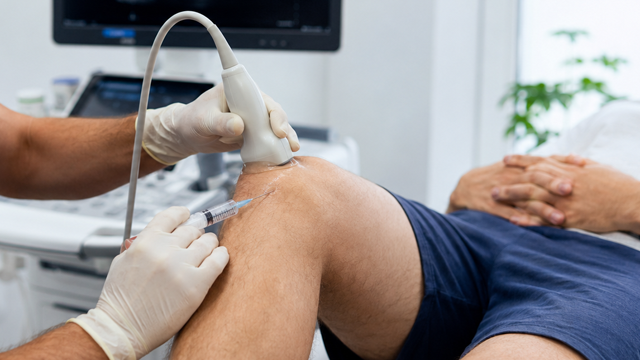
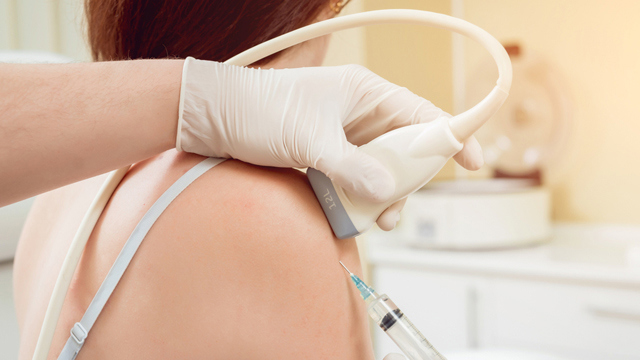
Using ultrasound to guide musculoskeletal diagnosis and injections is a well-recognized approach in radiology and orthopedic practice, not a proprietary or unusual technique. The Radiology Assistant, an educational resource widely used by radiologists and referring physicians, describes ultrasound-guided joint injection as offering real-time visualization of the needle as it approaches the target structure, which is presented as a key advantage over injecting to a fixed anatomical landmark without imaging guidance — because the physician can directly confirm the needle position relative to the joint, tendon, or ligament being treated rather than estimating it from surface anatomy alone. This general principle — that image guidance improves the physician's ability to place a needle accurately in real time — is the independent, technique-level rationale behind why ultrasound guidance is used broadly across musculoskeletal medicine, including at Nucellin Orthopedic Clinic.
It is worth being precise about what this means and does not mean: improved needle-placement accuracy is a mechanical, imaging-level advantage, and it is not, by itself, a guarantee of a particular clinical outcome for every condition or every patient. Nucellin Orthopedic Clinic's own material likewise frames this program around accurate diagnosis and individualized treatment planning rather than promising a specific result.
Who Performs This at Nucellin Orthopedic Clinic
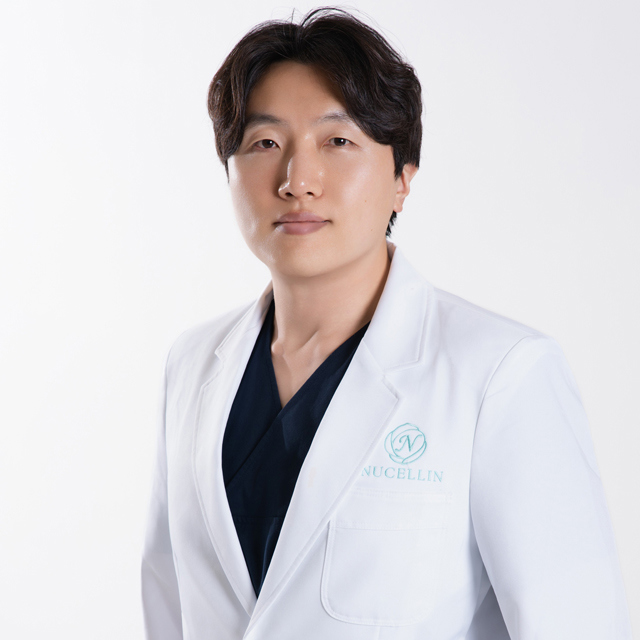
Dr. Heejun Kim, the clinic's Chief Director
Board-certified orthopedic surgeon
Dr. Heejun Kim, the clinic's Chief Director and a board-certified orthopedic surgeon, personally oversees consultation and precision diagnosis for this program, identifying the source of pain and determining an individualized treatment strategy himself rather than delegating this step. He is a graduate of Yonsei University College of Medicine, completed his orthopedic surgery residency and internship at Yonsei University Severance Hospital, and lists Ultrasound-Guided Interventional Orthopedics among his core specializations. His broader professional memberships include the Korean Knee, Shoulder, Spine Surgery, and Hip Societies, and ISMST (International Society for Medical Shockwave Treatment).
How This Fits Into a Visit
For an international patient, the practical sequence typically begins with an initial consultation where the patient's history and symptoms are reviewed, followed by the ultrasound assessment itself, during which Dr. Kim examines the relevant joint, tendon, ligament, or muscle in real time. Because the ultrasound findings are available during the same evaluation, the clinic states that the diagnostic result and the physician's treatment recommendation can typically be discussed within a single visit, rather than requiring the patient to return on a separate day purely to receive diagnostic results. Whether a same-day treatment (such as an ultrasound-guided injection) is appropriate immediately following diagnosis, or whether additional planning time is needed, depends on the specific finding and is confirmed individually.
What This Program Covers
Ultrasound-Guided Diagnostics & Pain Management is the umbrella under which several more specific services sit:
Service | What it involves |
|---|---|
Musculoskeletal Ultrasound Evaluation | Focused ultrasound assessment used for diagnosis and movement analysis, covered on its own dedicated page |
Ultrasound-Guided Pain Injections | Injections delivered with real-time ultrasound visualization for precision, covered on its own dedicated page |
Fluoroscopy-Guided Injection Therapy | An alternative image-guidance method (X-ray-based rather than ultrasound-based) used for selected injection procedures, covered on its own dedicated page |
Which specific service is appropriate for a given patient is determined by the diagnosis reached during this precision assessment, not chosen independently by the patient in advance. A patient arriving with, for example, chronic knee pain might be assessed with musculoskeletal ultrasound first, and depending on what that assessment finds, could be directed toward an ultrasound-guided regenerative injection, a fluoroscopy-guided procedure for a structure less accessible to ultrasound, or a different program entirely, such as shockwave therapy or QMR manual therapy, if the diagnosis points that way.
Why US and International Patients Choose This Program
Nucellin Orthopedic Clinic reports that patients from the United States commonly want confirmation that a proposed treatment is actually appropriate for their specific condition, prefer evidence-based diagnostic methods over a symptom-only approach, and expect advanced diagnostic evaluation before any treatment decision is made. Common questions the clinic reports hearing from US patients include whether their pain requires surgery, what is causing chronic pain, which diagnostic methods the clinic uses, and what technology is available — questions this program is specifically designed to answer before a treatment plan is proposed. The clinic frames its broader appeal around a board- and residency-trained orthopedic surgeon personally leading every case, internationally sourced diagnostic equipment such as the Philips EPIQ 5, a private one-to-one consultation environment, and an English-speaking team supporting the full process from initial evaluation onward.
International patients can use the clinic's online reservation system to arrange a diagnostic consultation, and the clinic publishes its address, operating hours, and travel guidance — including an airport limousine bus route from Incheon International Airport, driving directions, and valet parking — to help plan a visit built around this precision-first diagnostic approach.
What Sets a Diagnosis-First Approach Apart
Nucellin Orthopedic Clinic positions itself as a physician-led regenerative orthopedic practice that combines comprehensive physical examination, musculoskeletal ultrasound, and functional movement assessment to identify the source of a patient's pain before recommending treatment — rather than starting from a preferred treatment and working backward. The clinic states that this diagnostic step then feeds directly into whichever of its more specific programs is appropriate: ultrasound-guided or fluoroscopy-guided regenerative injections, Activated PRF, stem cell therapy, or individualized rehabilitation. For patients travelling internationally in particular, the clinic frames this sequence — precise diagnosis first, individualized treatment second — as a way of avoiding a generic, one-size-fits-all protocol applied without first confirming what is actually causing the pain.
Who Is a Good Candidate for This Program?
Nucellin Orthopedic Clinic identifies the following as patients who may benefit from Ultrasound-Guided Diagnostics & Pain Management:
Patients with joint pain of unclear origin who want a precise diagnosis before treatment.
Patients with suspected tendon or ligament injuries.
Patients with musculoskeletal pain related to sports or repetitive activity.
Patients whose prior treatment addressed a general area rather than a specifically identified pain point.
Patients who want treatment decisions to follow directly from an imaging-confirmed diagnosis.
The clinic's published material does not specify detailed exclusion criteria for this diagnostic program; specific candidacy for any resulting treatment is confirmed individually once a diagnosis is reached. Patients who have already had imaging or treatment elsewhere are welcome to bring prior records to consultation, since this can help Dr. Kim compare findings and avoid repeating tests unnecessarily, though the clinic's published material does not specify a formal policy for reviewing outside imaging before a visit.
What to Expect
Nucellin Orthopedic Clinic describes patients undergoing orthopedic consultation, examination, and diagnostic ultrasound assessment before any treatment plan is finalized. Diagnostic ultrasound findings are available to the physician during the same evaluation, though the clinic notes that clinical improvement from any resulting pain-management treatment varies by condition and treatment plan — the diagnostic step itself does not, on its own, resolve pain. The clinic's published material does not specify a standard recovery timeline, since recovery depends on which specific downstream treatment (for example, an ultrasound-guided injection or a shockwave session) is ultimately selected based on the diagnosis.
Safety, Precision, and Clinic Standards

Diagnosis is personally performed and reviewed by Dr. Heejun Kim, a board-certified orthopedic surgeon, using the Philips EPIQ 5 ultrasound system.
Real-time image guidance for needle-based procedures is a recognized, independently documented technique-level advantage for accuracy, as described by resources such as the Radiology Assistant, though it is not a guarantee of any specific clinical outcome.
Nucellin Orthopedic Clinic is a Registered Medical Institution for Attracting Foreign Patients, certified by Korea's Ministry of Health and Welfare (Business Registration Number 252-08-03394).
The clinic does not publish a specific complication rate for this diagnostic program; risks associated with any resulting injection-based treatment are discussed individually once a treatment is selected.
Diagnostic ultrasound itself is a non-ionizing, non-invasive imaging method, in contrast to the X-ray-based fluoroscopy the clinic also offers for selected procedures — a distinction worth understanding when comparing the two image-guidance options presented on this program's overview.
The Bottom Line
Ultrasound-Guided Diagnostics & Pain Management is Nucellin Orthopedic Clinic's precision-first diagnostic approach, using the Philips EPIQ 5 system and personally reviewed by Dr. Heejun Kim.
It underpins three more specific services — Musculoskeletal Ultrasound Evaluation, Ultrasound-Guided Pain Injections, and Fluoroscopy-Guided Injection Therapy.
Image-guided precision is a genuine, independently documented technique-level advantage for needle placement, not a guarantee of outcome.
Which specific treatment follows is determined by the diagnosis, not chosen in advance by the patient.
Candidacy and next steps are confirmed during a consultation with Dr. Kim.
Frequently Asked Questions
Why use ultrasound before deciding on treatment? Ultrasound lets the physician see the joint, tendon, or ligament in real time rather than relying on external landmarks alone, which independent resources such as the Radiology Assistant describe as improving the accuracy of subsequent needle-based procedures.
Is the diagnostic ultrasound itself painful? Diagnostic ultrasound imaging is non-invasive; the clinic states that ultrasound guidance is used to improve precision during orthopedic procedures and injections but does not publish specific pain-level data for the diagnostic step itself.
Will this diagnosis tell me exactly which treatment I need? It identifies the source and nature of the pain, which then informs the treatment recommendation — for example, an ultrasound-guided injection, shockwave therapy, or a different service entirely — rather than prescribing a single fixed treatment for every diagnosis.
How is this different from Fluoroscopy-Guided Injection Therapy? Ultrasound guidance uses sound-wave imaging and is radiation-free; fluoroscopy uses a different, X-ray-based imaging method. The clinic offers both, and the appropriate choice depends on the specific structure being treated and the procedure planned.
Does a precise diagnosis guarantee pain relief? No. Nucellin Orthopedic Clinic's own material states that clinical improvement varies by condition and treatment plan; an accurate diagnosis is the basis for an appropriate treatment recommendation, not a guarantee of a specific outcome.
Who personally reviews my ultrasound findings? Dr. Heejun Kim, the clinic's Chief Director and a board-certified orthopedic surgeon, personally reviews diagnostic findings and determines treatment points, rather than this step being handled by a technician alone.
Can this diagnostic step help if previous treatment elsewhere did not resolve my pain? The clinic states that its precision-diagnosis approach is designed to identify the specific source of pain, which can be useful for patients whose prior treatment addressed a general area without first confirming the exact structure involved. Whether this changes the recommended treatment path for a specific case is assessed individually at consultation.
Does Nucellin Orthopedic Clinic offer this diagnostic evaluation in English? Yes. The clinic states that an English-speaking team supports international patients through consultation and diagnosis, and that its online reservation system can be used to arrange an appointment in advance of travel.
What happens after the diagnosis if I need a treatment the clinic doesn't offer? The clinic's published material does not address referral pathways for conditions outside its regenerative orthopedic scope; general referral and limitation policies are confirmed directly with Dr. Kim during consultation.
Do I need a referral to book this diagnostic evaluation? The clinic's published material does not state that a physician referral is required to book a consultation; international patients typically arrange an appointment directly through the clinic's online reservation system.
Why Diagnosis Comes Before Treatment Selection
Because Nucellin Orthopedic Clinic offers several different regenerative and physical modalities — including PRP, PDRN, Conjuran, shockwave therapy, QMR manual therapy, stem cell therapy, and both ultrasound- and fluoroscopy-guided injections — a precise diagnosis is what determines which of these, if any, is actually appropriate for a given patient. The clinic's stated approach is to avoid recommending a specific injection or regenerative therapy before confirming, through imaging and physical assessment, exactly which structure is involved and what is driving the patient's symptoms. This sequencing is also why this page exists as its own program rather than being folded directly into any single treatment page: the diagnostic step is shared groundwork for several different possible next steps, not a preamble to one predetermined treatment.
Book a Consultation at Nucellin Orthopedic Clinic
Whether your goal is a second opinion on a previous diagnosis or a first evaluation of new musculoskeletal pain, this program is the starting point Nucellin Orthopedic Clinic recommends before any regenerative treatment decision is made. To arrange a precision diagnostic evaluation, book a consultation with Dr. Heejun Kim at Nucellin Orthopedic Clinic, or learn more about the clinic and Dr. Kim beforehand, and bring any prior imaging or treatment records you may already have.
Disclaimer
This page is for general informational purposes and does not constitute individualized medical advice. Candidacy, technique, and expected outcomes can only be determined through a consultation with a qualified physician.
Sources & Further Reading
Related Services
Procedures available within our clinical departments.

QMR Regenerative Manual Therapy
QMR Regenerative Manual Therapy at Nucellin Orthopedic Clinic combines Telea Medical's QMR (Quantum Molecular Resonance) technology, sourced from Italy, with hands-on manual therapy as part of the clinic's regenerative joint and spine treatment program.
Learn More
Musculoskeletal Ultrasound Evaluation
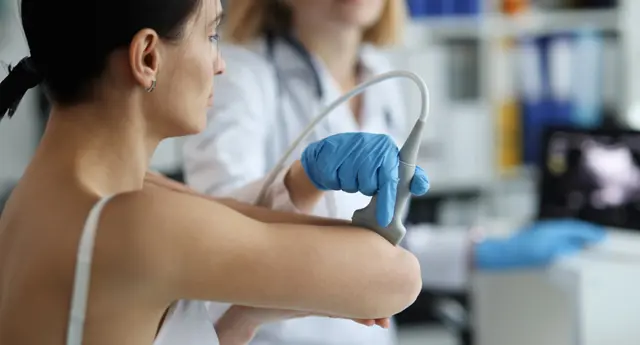
Musculoskeletal Ultrasound Evaluation is used by Nucellin Orthopedic Clinic as part of its musculoskeletal assessment process, providing real-time, non-invasive imaging of muscles, tendons, ligaments, nerves, and joints using the clinic's Philips EPIQ 5.
Learn More
Personalized Rehabilitation Therapy
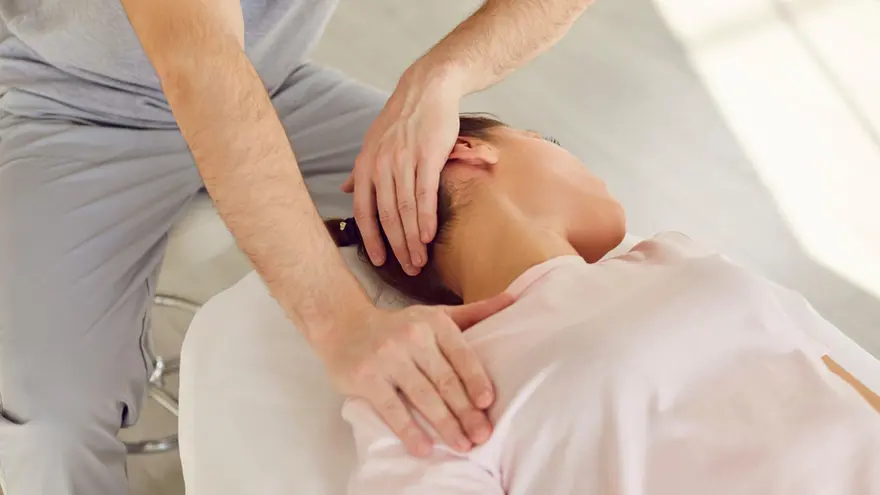
Personalized Rehabilitation Therapy at Nucellin Orthopedic Clinic combines physician-directed diagnosis with Telea Medical QMR (Quantum Molecular Resonance) technology and hands-on manual therapy.
Learn More